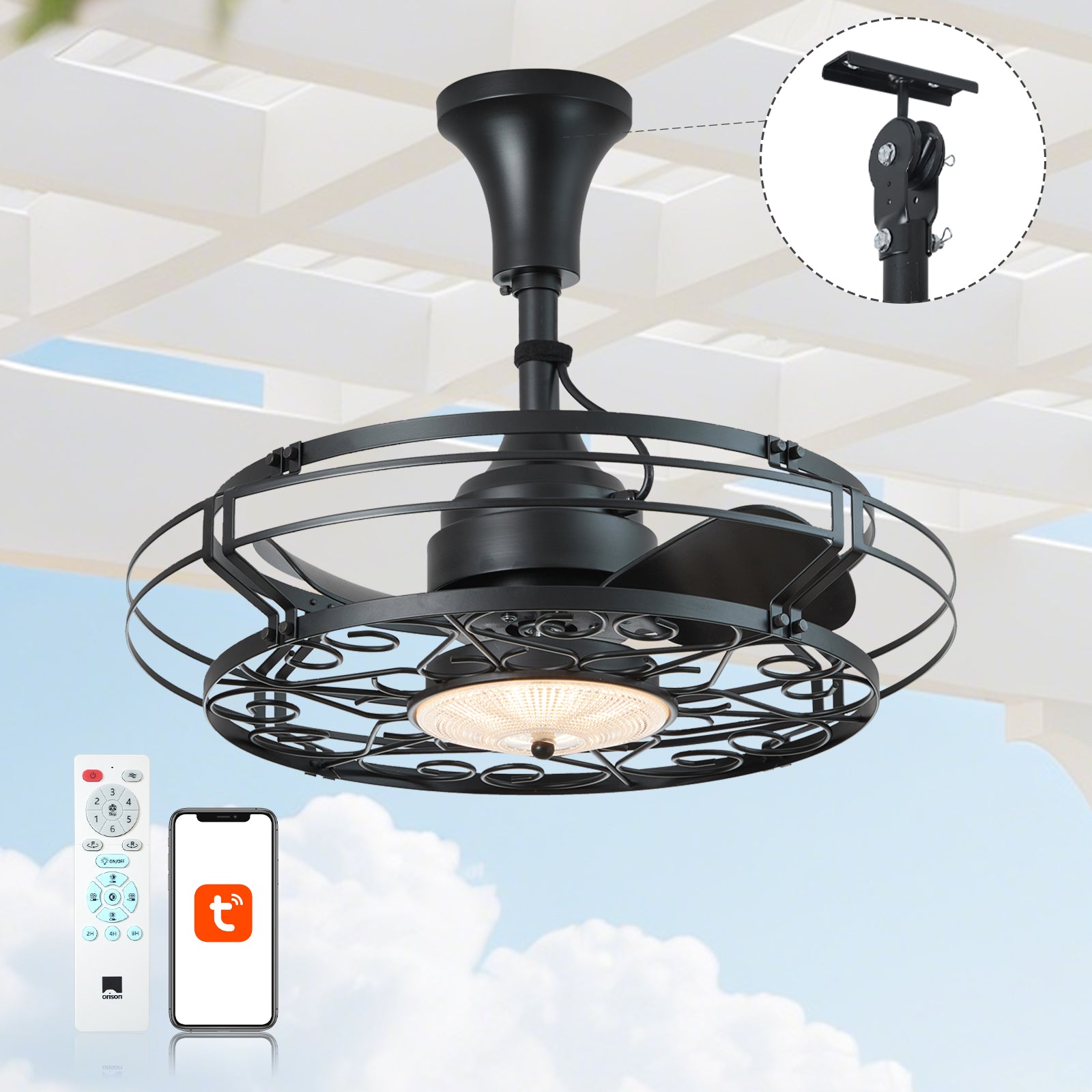
Comparative premise: why scale dictates specification
Selecting an appropriate outdoor cooling solution requires a controlled comparison: small gazebos demand different airflow and mounting solutions than large patios. Focused evaluation of blade span, CFM, and ingress protection (IP rating) yields predictable performance rather than guesswork. For practical procurement, consider product classes such as outdoor patio ceiling fans and the category of outdoor fan with light for gazebo as benchmarks: they illustrate how motor sizing, downrod length, and integrated lighting change between small and large applications. The logic is particularly relevant during prolonged heat events—NOAA’s 2023 seasonal reports underscore increasing peak temperatures—so correct sizing translates directly to comfort and energy efficiency.

Core performance metrics to compare
To make an objective decision, measure each candidate against three technical axes: airflow capacity (CFM), mechanical compatibility (downrod/ceiling height, motor RPM), and environmental durability (IP rating, corrosion-resistant finishes). Additional secondary indicators include lumen output for integrated lights, blade pitch for effective air displacement, and wattage for electrical load planning. These metrics produce a reproducible decision matrix rather than relying on stylistic appeal alone.
Specifications for small spaces (gazebo, 8–12 ft span)
Small enclosures benefit from compact fans with focused airflow patterns. Recommended specs:- Blade span: 36″–44″ to avoid over-saturation of turbulent flow in a confined volume.- Target airflow: 1,200–3,500 CFM depending on occupancy and ceiling height.- Mounting: short downrod or hugger mount if ceiling height <9 ft; otherwise a 6–12" downrod for optimal clearance.- IP rating: minimum IP44 for covered outdoor use; choose IP65 for open-air gazebos to resist water ingress.- Lighting: integrated LED modules sized 800–1,600 lumens for functional illumination without excessive heat generation.These parameters minimize rebound turbulence and ensure the motor operates within its rated RPM range, preserving acoustic performance and lifespan.
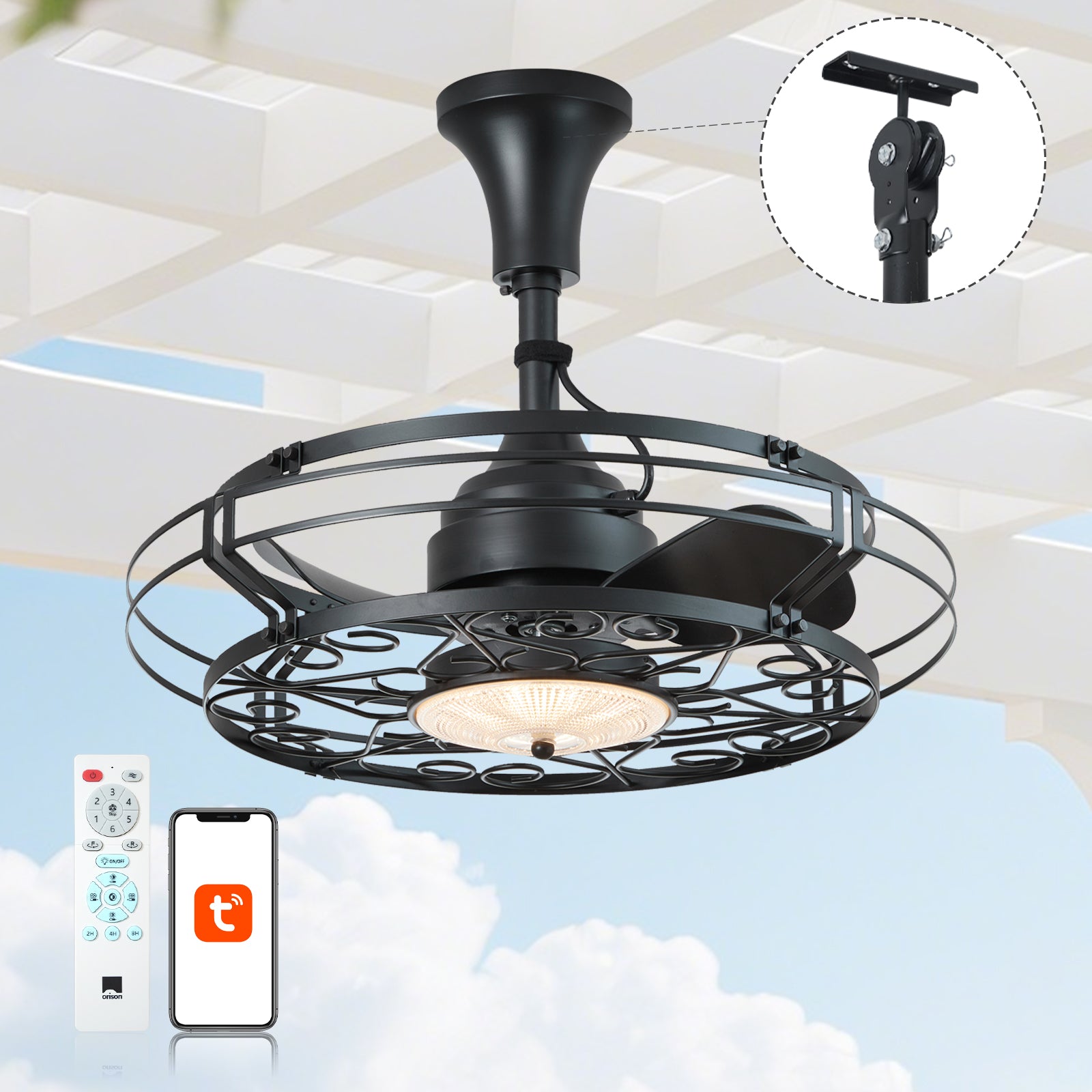
Specifications for large spaces (patio, 13+ ft span or open-plan)
Large areas require broader coverage and often multiple fan strategies. Recommended approach:- Blade span: 52″–60+”; consider multiple 44″–52″ units for irregular layouts to minimize dead zones.- Target airflow: 3,500–8,000+ CFM per fan, adjusted by the number of units and spacing.- Mounting: longer downrods (12–36″) to position the fan in the bulk airflow and avoid ceiling shear layers.- Motor: high-efficiency motor with rated RPM supporting sustained airflow; brushless DC motors are preferred for variable-speed control and lower wattage.- IP rating: IP65 or greater in exposed installations; specify marine-grade finishes in coastal areas to prevent corrosion.For large roofs, airflow modelling or on-site smoke tests can validate placement prior to final installation.
Installation considerations and common errors
Technical failures most often arise from mismatched expectations: selecting a small-span fan for a high-volume patio, underestimating required downrod length for vaulted ceilings, or choosing insufficient IP protection. A frequent oversight is ignoring closure and wiring compatibility with existing junction boxes—this forces costly rework. Also, lumen output is sometimes treated as an afterthought; integrated fixtures should be specified with correlated color temperature (CCT) and lumen maintenance data to avoid frequent replacements. —Do not assume aesthetic parity implies performance parity: identical blade counts can yield very different CFM based on blade pitch and motor torque.
Comparative deployment patterns
Small gazebo deployment: single 36″–44″ fan, short downrod, IP44–IP65, 1,200–3,500 CFM, 800–1,600 lumens. Large patio deployment: either a large 52″–60″ fan centrally located or a grid of 44″–52″ fans spaced to overlap airflow patterns, IP65+, 3,500–8,000 CFM per unit, 1,600–3,000 lumens per fixture. When in doubt, prioritize increasing CFM and adjusting blade span over simply increasing motor RPM; effective blade pitch and motor torque produce more usable airflow with lower acoustic penalty.
Advisory: three critical evaluation metrics (golden rules)
1) CFM per square foot: target at least 20–40 CFM/ft² for living patios, and 30–60 CFM/ft² for active-use gazebos; verify with manufacturer test data. 2) Environmental specification: require an explicit IP rating and finish specification in the purchase order; coastal or uncovered installations need marine-grade corrosion resistance. 3) Mounting and integration: confirm downrod length, ceiling structure, and junction-box compatibility before procurement; demand a site-mounted trial or template to eliminate fit issues on installation day.
When these rules are applied, installation risk and warranty claims decline, and occupant comfort becomes a predictable outcome. In practice, a well-specified outdoor fan with integrated light from a supplier that publishes CFM curves and IP test data reduces iteration. Orison exemplifies this by combining measured airflow performance with installation documentation—practical value that aligns engineering intent with field results. Worth noting.