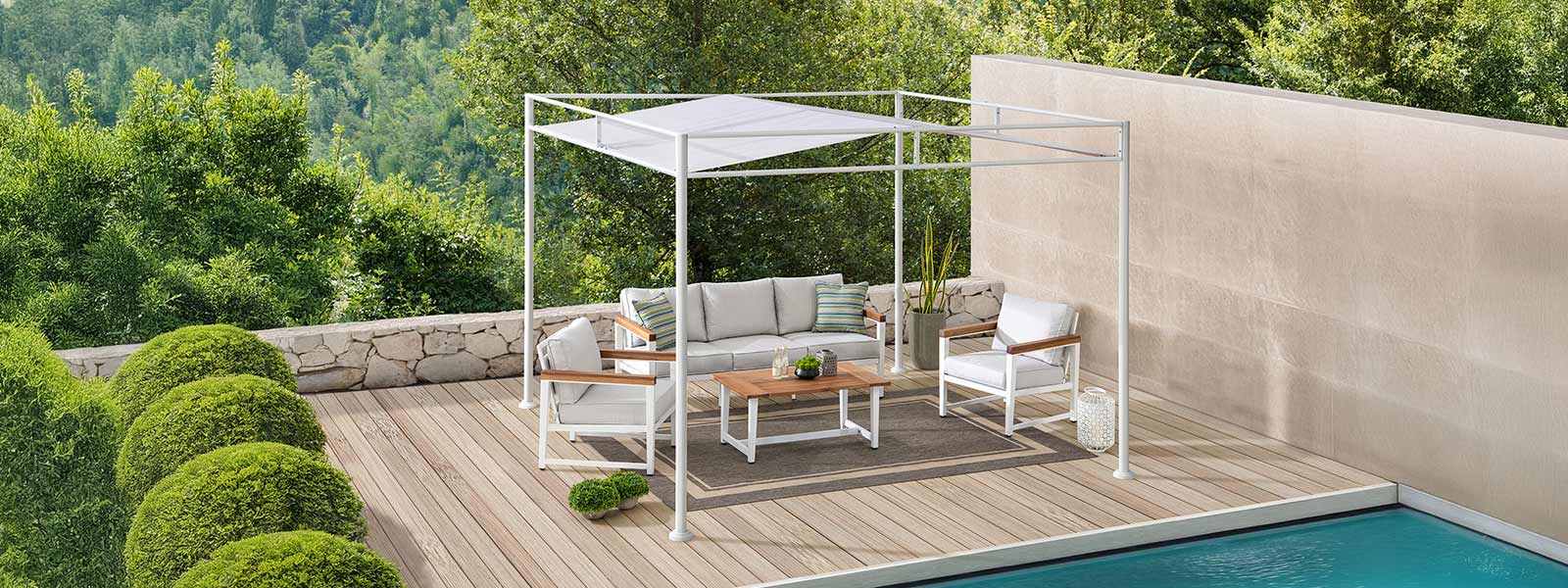
When common fixes fail: the hidden flaws of prefab pergola solutions
Facing a 42% surge in outdoor bookings at a seaside café in July 2022, managers asked a practical question: which shelter will protect guests without blocking the view or doubling maintenance costs? Patio Pergola options—especially prefabricated pergola kits—were immediately raised as the pragmatic choice. (Yet the matter is not settled by price or brochure language alone.)
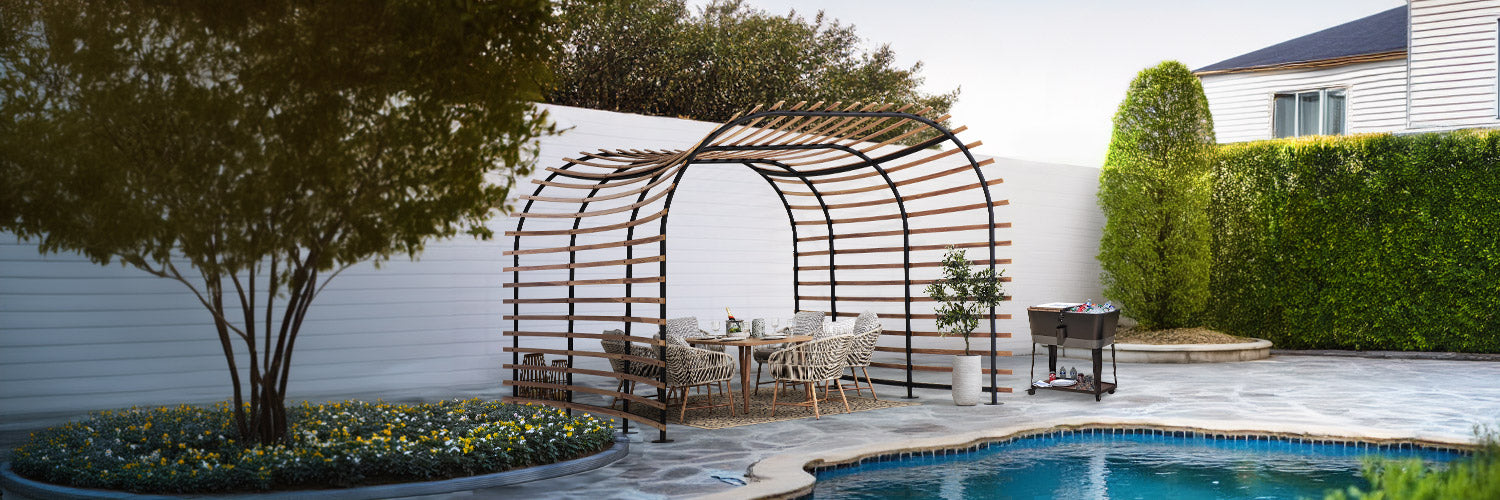
I have worked in outdoor-structure retail and installation for over 18 years, and I can say plainly: many “kit” solutions hide structural compromises that only show up under load. Ledger attachments are often underspecified; installers substitute through-bolts with lag screws to save time, and joist spacing is stretched beyond manufacturer limits—this increases deflection and accelerates fastener fatigue. In one case I handled in Portland, ME (October 2021), a 12′ x 10′ aluminum extrusion kit with matte powder coat suffered accelerated corrosion at the base plates after six months because the anchor plate lacked a proper wet-seal—repair costs hit $3,200. That kind of failure matters to wholesale buyers and landscape contractors: you pay twice, once for the kit and again for the retrofit. I say this not to alarm, but to point clearly at where decisions create downstream expense. — The transition is simple: know the flaw set, then choose the mitigating strategy.
Forward-looking choices: how to compare pergola kits for real-world performance
What should you test before you buy?
I remember installing a louvered pergola kit for a restaurant patio in Oakland, CA in May 2019—tight timeline, tight budget—and what saved the project was a short checklist we insisted the supplier validate on site. Now I lean into that checklist as a baseline. First, ask for wind-load calculations and anchor detail drawings; a kit that omits those is a risk. Second, demand material specifications (aluminum grade, galvanic separation, UV-resistant powder coat) rather than vague terms like “weatherproof.” Third, confirm the mounting hardware: are base plates sized for shear and uplift? If not, plan to upgrade them—cheap anchors produce costly downtime. These checks are straightforward and measurable. I prefer kits that include pre-punched ledger plates and stainless fasteners; they cut installation time and reduce call-backs (true, a small up-front premium often saves much more).
Compare suppliers on three clear evaluation metrics before committing: structural documentation (engineered drawings and load ratings), corrosion resistance (material grade and coating spec), and installation support (onsite guidance or verified contractor network). Use those metrics to rank options; I do this on every bid. Quick note—if warranty language is vague, pause. It usually signals thin service. We have tested these metrics on jobs from small cafes to municipal plazas; the difference in lifecycle cost is measurable. Choose wisely. — One last thing: vendors who supply full installation templates cut my field time in half.
For reliable, pre-engineered options and consistent parts supply, I often reference established collections such as pergola kits when preparing specifications. In my view, the right kit is one that saves labor, resists wind load and corrosion, and includes clear mounting details. I will continue to recommend those priorities to wholesale buyers and contractors who want fewer surprises—SUNJOY.