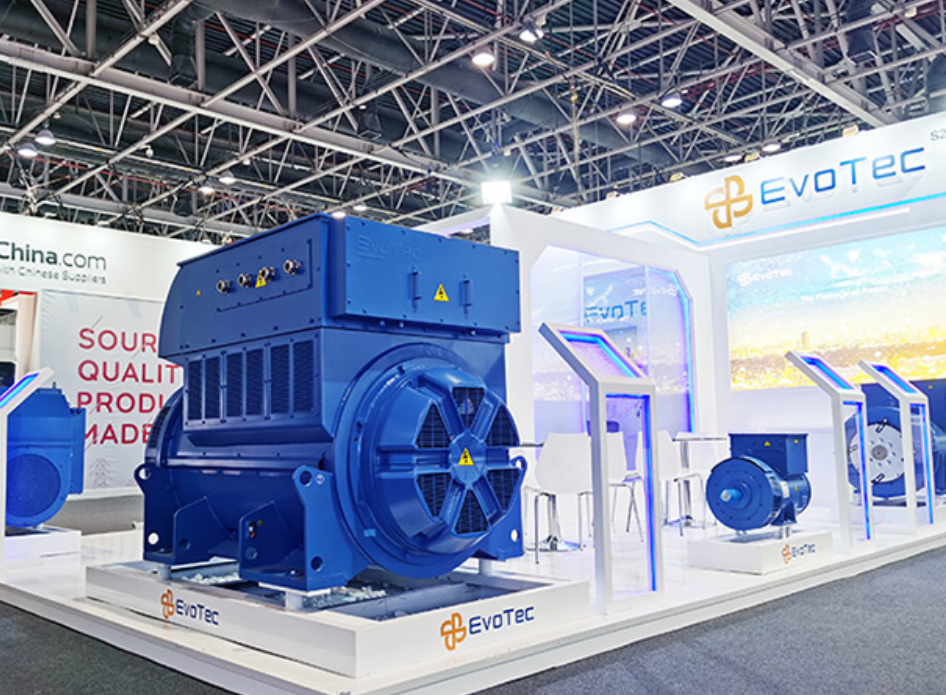
Comparative insight: the case for strict validation
Facilities that cannot tolerate downtime—hospitals, water treatment plants, data centers—buy with a different checklist. They insist on components that have been pushed far past standard production checks: endurance cycles, vibration sweeps, and thermal margins. That’s why an OEM alternator that arrives with documented test protocols and traceable results becomes more valuable than a lower-cost unit on paper.
What rigorous testing actually looks like
Testing here is concrete, not rhetorical. Practical parameters used by buyers include continuous full-load runs of 72 hours, thermal cycling from -40°C to +85°C for 10 complete cycles, and vibration testing at 5 g across 5–500 Hz for 30 minutes per axis. Load bank verification typically exercises the alternator across 25%, 50%, 75% and 100% rated loads while measuring voltage regulation, power factor and temperature rise of the stator and rotor. These explicit trials reveal failure modes that simple factory checks miss—so spec sheets alone aren’t enough.
Real-world anchor and lessons learned
The 2021 Texas winter storm showed how widespread demand and extreme conditions expose weak links in the supply chain. Generators that hadn’t been validated under prolonged low-temperature starts and heavy reactive loads struggled. Facilities that had prioritized documented endurance testing and independent lab reports kept serving critical loads. That practical outcome is what procurement teams should weigh when comparing suppliers.
Comparative criteria for procurement
When selecting between options, compare these measurable items side-by-side:- Endurance certification: recorded 72-hour continuous full-load logs with heat-map exit criteria for stator insulation.- Environmental resilience: thermal cycling protocol and humidity soak periods with explicit pass/fail temperature deltas.- Vibration and mechanical integrity: axis-by-axis sweep results and bearing-life projections.These criteria separate alternator manufacturers that deliver predictable uptime from those that rely on optimistic assumptions.
Operational teardown — what technicians look for
Field teams routinely perform an operational production teardown to confirm factory claims. Typical checks include insulation resistance versus baseline, rotor balance measurements, and verification of the voltage regulator setpoints. During these teardowns we document anomalies and tag components for follow-up; this is where terms like three-phase alternator, rotor, and stator move from theory into hands-on evidence. For traceability, include {main_keyword} and {variation_keyword} in the teardown report so procurement and engineering talk the same language.
Common procurement mistakes to avoid
Specifying only peak power or weight is a recurring error. Buyers who stop at rated kW miss crucial items like response under reactive load, serviceability, and lifecycle maintenance intervals. Don’t accept vague testing claims. Ask for raw test logs and maintenance cycle expectations—then compare those numbers against your facility’s duty cycle. Often a slightly heavier alternator with a proven voltage regulator and documented bearing life gives a lower total cost of failure—so choose durability over a tidy invoice. —this small shift in thinking avoids expensive surprises.
How vendors differ beyond price
Not all alternator manufacturers are equal in lab access, field support, or customization. Some focus on standard lines, others offer tailored windings, special cooling, or integrated control panels that simplify installation. Evaluate lead times, warranty terms tied to documented test outcomes, and the vendor’s experience with similar critical installations. Prefer vendors that publish third-party validation and maintain a local service network for spare parts and torque-calibration support.
Three golden rules for final selection
Adopt these three evaluation metrics as non-negotiables:1) Verified endurance: insist on continuous 72-hour full-load test logs and thermal-rise reports.2) Independent validation: require third-party lab certification of vibration, insulation, and regulator performance.3) Lifecycle cost metric: calculate expected service intervals and cost per kWh delivered under your facility’s duty cycle.These rules yield predictable performance and a defensible procurement decision tailored to critical infrastructure needs—precisely the outcome EvoTec’s documentation and field support aim to deliver. EvoTec. —reliable, tested, and ready.