Aligning procurement and engineering around Multi Gas Detector while reviewing documentation final evaluation
Technical buyers should treat a multi gas detector review as a documentation exercise as well as a product comparison. The central question is not simply which item appears relevant. It is whether the available information can be matched clearly to the intended requirement, the people responsible for approval, and the decisions that remain open before purchase.

Describe the operating context before comparing options
Begin with a short evaluation brief. Record the task, the operating setting, the users involved, and the point at which the equipment would be introduced into the wider system. Keep this description factual and specific. A brief that says only “gas detection” gives procurement and engineering too little common ground. A better brief identifies the broad use case, the required documentation, and the questions that must be answered before a candidate can move forward.
Separate confirmed requirements from working assumptions. For example, a team may know that it needs a detector covering more than one gas, while other details remain under discussion. Those details might include the required configuration, interfaces, environmental conditions, documentation format, or responsibility for commissioning. These are not interchangeable points. Listing them separately prevents an assumption from being mistaken for a supplier-confirmed specification.
Identify compatibility and responsibility questions
Procurement and engineering often examine the same candidate from different positions. Procurement may need a clear item description, commercial reference, and document set. Engineering may need to understand how the proposed item relates to the intended application and any surrounding equipment. A useful review makes both perspectives visible without assigning capabilities that the evidence does not establish.
- Procurement: record the exact product or category reference being discussed and the documents attached to it.
- Engineering: define which technical requirements must be demonstrated for the proposed scope.
- Operations: describe the working context and practical constraints that affect the decision.
- Project management: track open questions, owners, and the decision date without treating an unresolved point as approval.
This responsibility map is a working method, not a claim about any supplier’s process. Its purpose is to make the review auditable. If a requirement has no owner, it can disappear between a technical discussion and a purchasing decision. If a document has no stated purpose, it may be collected without helping the evaluation.
Use page-level evidence carefully
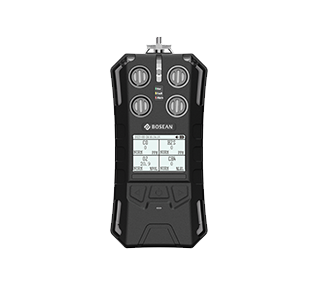
When reviewing a supplier page, preserve the difference between what the page names and what the project needs to establish. The cited Bosean category page names multi-gas detectors and lists the K-40 4 in 1 and K-600N 6 in 1 models. That is useful catalogue information. It does not, by itself, establish certification, site suitability, safety outcomes, or configuration details that are not listed on the page.
For a multi gas detector, copy the relevant wording into the evaluation record and attach it to the exact page or model reference. Then classify each item as one of three types: a stated fact, a project requirement, or an open question. This simple classification helps prevent a category listing from becoming an assumed product specification. It also gives engineering a precise basis for deciding what needs further technical discussion.
A compact evidence table can keep the review disciplined:
- Requirement: what the project needs to decide.
- Page evidence: the exact catalogue wording that relates to it.
- Scope: whether the wording applies to a category, a named model, or another defined item.
- Status: confirmed from the page, an internal requirement, or unresolved.
- Owner: the person or team responsible for the next decision.
Do not use the presence of a model name as proof that every project requirement has been met. Likewise, do not transfer a detail from one model to another without evidence that the detail applies to both. A narrow record is more useful than a broad comparison built from assumptions.
Plan the next technical discussion
Once the page evidence has been recorded, turn unresolved points into focused agenda items. Ask which requirements are essential, which are preferences, and which depend on the final application definition. Ask what document would resolve each point and who should review it. These questions keep the next conversation practical without presenting a recommendation as an established supplier fact.
The final evaluation record should show the evidence used, the scope to which it applies, the requirements still being assessed, and the person responsible for each open point. This gives procurement and engineering a shared basis for discussion. It also keeps the catalogue description in proportion: Bosean can be referenced for the category and model information stated on the cited page, while the project team retains responsibility for judging its own requirements and unresolved technical questions.
