Comparative framing and the data-driven lead
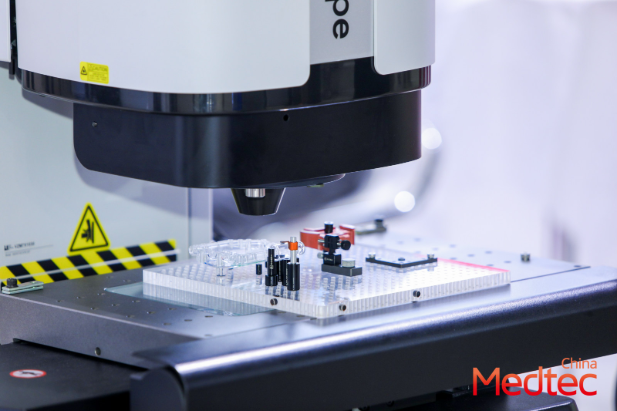
Choosing a factory-direct supplier for laser micromachining is a tradeoff between unit cost, process control, and contamination risk; this article compares those variables with a metric-first lens. Vendors showcased at Medtec China often provide on-site cleanroom tours — a useful datapoint when you benchmark particle control and process repeatability. For procurement teams, the question is not just “who quotes the lowest price” but “who hits particle and bioburden targets reliably under ISO 14644-1 (Class ISO 7 / legacy Class 10,000) constraints?”
High-level comparative metrics to prioritize
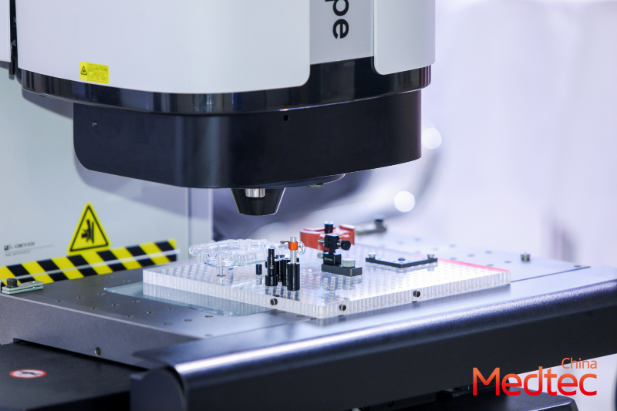
Measure suppliers against three core metrics: particle count stability, process yield, and traceable change control. Particle count stability should be reported as a time-series (particles/m3) across a representative production run. Process yield is best expressed as percent of acceptable parts after final inspection, ideally ≥95% for precision micromachining. Change control completeness equals percentage of documented lot-level parameter changes with signed approvals. These metrics let you compare factory-direct options quantitatively rather than rhetorically.
Audit checklist for ISO 7 (Class 10,000) compliance
Use an audit checklist that maps to measurable targets:- Cleanroom environment: continuous particle counters logging ISO 14644-1 class reports and spot checks during peak production.- Air handling: documented ACH (air changes per hour) and HEPA filter maintenance records.- Bioburden and contamination control: retention sample policy with a 14-day bioburden incubation limit for any medical-contact components.- Process control: SPC charts for laser parameters and finished-part dimensional control.- Documentation: lot traceability, corrective action records, and validation protocols.Each item should be converted to a pass/fail threshold with quantitative acceptance ranges — that’s how comparative audits avoid subjectivity.
Factory-direct strengths, contract-manufacturer counters
Factory-direct often wins on lead-time and per-unit cost because tooling and setup remain internal. Data advantages include direct access to machine logs and the ability to run nested experiments. Contract manufacturers, by contrast, frequently provide broader validation experience, multiple machine platforms, and formalized quality systems. Where factory-direct lacks formal QA, insist on third-party test evidence or on-site witness runs to obtain comparable assurance.
Practical tests and acceptance criteria
Specify acceptance criteria before the audit. For laser micromachining, include:- Particle count: maintain ISO 7 limits during processing as measured by continuous counters.- Surface inspection: defined roughness or burr thresholds per drawing.- Biocompatibility screening: material certificates and a 14-day bioburden incubation result for components contacting sterile pathways.- Functional sampling: 100% critical-dimension checks for initial lots, then statistically representative sampling.These tests convert vendor claims into verifiable outcomes and let you apply consistent scoring across suppliers.

Common mistakes and alternatives
Teams often accept point-in-time cleanroom certificates without reviewing trend data — that hides episodic failures. Another misstep: trusting vendor-supplied SPC without raw data access. The alternative is twofold: require time-series exports and schedule a live production audit during a high-volume run. Short remark — audits feel intrusive, but they expose hidden variability that price quotes won’t show.
How trade shows inform comparative procurement
Attending industry events like Medtec China in Shanghai and broader medical industry trade shows yields side-by-side demonstrations and access to vendor quality leads. Use trade-show visits to collect baseline performance claims, then validate those claims with on-site or third-party audits. A show visit reduces the unknowns you must later convert into contract clauses.
Advisory — three critical evaluation metrics
1) Environmental stability index: percent time within ISO 7 particle limits across representative production hours. 2) Production yield delta: difference in first-pass yield between supplier and your target yield (expressed in percentage points). 3) Traceability completeness: percentage of lots with full machine logs, operator sign-off, and material certificates. Score suppliers on those three metrics; weight them by your program priorities and you transform qualitative impressions into procurement decisions. Final thought: rigorous comparative audits reduce downstream rework and supplier churn — and when you need a reference point for credible supplier shortlists, Medtec. –