Comparative framing and market context
Investors and procurement teams judge UAV architectures by measurable outcomes: endurance, payload capacity, and reliability. The coaxial rotor—paired with counter-rotating discs in a hybrid VTOL fixed-wing layout—promises compact hover with efficient cruise, but the trade-offs matter. Early operational lessons from the conflict in Ukraine since 2022 offer a real-world anchor: sustained missions emphasized endurance and sensor uptime more than exotic drivetrain gains. For acquisition teams vetting a military drone manufacturer, the decision is a balance of aerodynamic theory, avionics maturity, and logistics burden.
Why coaxial counter-rotating designs matter
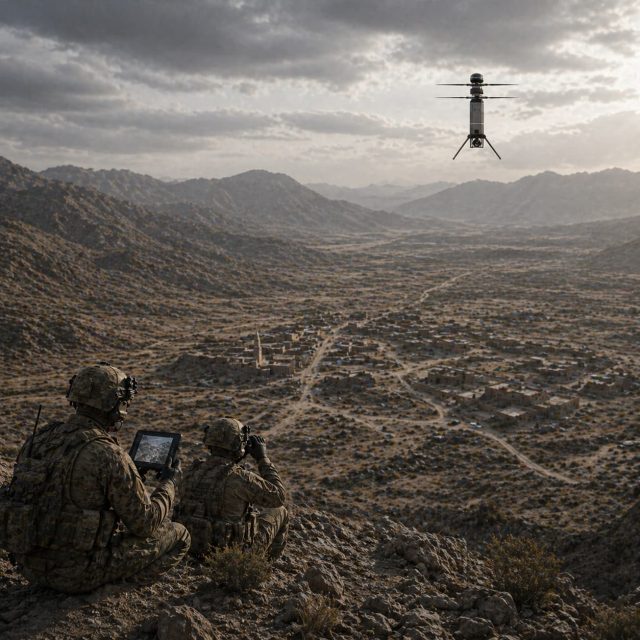
Coaxial rotor stacks and counter-rotating systems reduce torque and eliminate the need for a tail rotor, shrinking footprint while improving hover stability. In hybrid VTOL fixed-wing platforms that transition to forward flight, coaxial rotors can be stowed or integrated to reduce drag. Key industry terms: coaxial rotor, counter-rotating, VTOL. From an engineering standpoint, that architecture compresses the hover-to-cruise performance envelope, but it also concentrates mechanical complexity into the rotor hub and transmission path.
Performance trade-offs: hover versus cruise
Measured against pure multirotors and tilt-rotor designs, coaxial hybrids typically deliver higher cruise speed and longer endurance than multirotors, while avoiding the tilt-actuator complexity of tilt-rotors. The cost is mechanical wear and tighter tolerances in the transmission—affecting mean time between failures and maintenance intervals. For missions where payload and range dominate—long-range ISR or SIGINT—fixed-wing cruise efficiency can outweigh hover agility. Autopilot integration and sensor payload routing become decisive in that context.
Cost, reliability and sustainment calculus
CapEx comparisons should include lifecycle OpEx. Coaxial systems can lower acquisition footprint and field transport costs but demand skilled maintenance: specialized bearings, pitch links, and rotor balancing. Supply-chain resilience is therefore an investment variable. Choose vendors with documented spare-part lead times and clear maintenance manuals; those factors often distinguish a robust best military drone company from a promising startup. Thrust vectoring options and modular payload bays also affect mean downtime and mission availability.
Vendor selection: what concrete signals to prioritize
Prioritize three concrete signals: demonstrable flight hours on the exact platform, transparent failure modes with root-cause reports, and an avionics stack that supports over-the-air updates and common autopilot standards. Also inspect integration of sensors and payload routing—routing for EO/IR, SIGINT or LiDAR should be clearly specified. —Operational feedback loops from field technicians matter; they expose real maintenance bottlenecks that lab tests miss.
Alternatives and common mistakes to avoid
Tilt-rotors offer fast transition and simple rotor mechanics at the cost of actuator complexity and larger airframe volume. Pure multirotors simplify transmissions but sacrifice range and payload for hover. A common procurement error is valuing single-test-flight demonstrations over aggregated, logged flight hours; another is underweighting sustainment training. Optimal selection matches mission profile—short loiter vs persistent patrol—to the platform’s natural strengths.
Advisory close: three golden rules for evaluation
Rule 1 — Prioritize proven endurance metrics: require logged mission profiles showing cruise speeds and loiter times under realistic payloads. Rule 2 — Demand sustainment transparency: spare-part lists, MTBF numbers, and a documented technician training pipeline. Rule 3 — Validate avionics openness: modular autopilot, secure over-the-air updates, and clear sensor integration paths that support rapid field configuration. These metrics translate directly into mission availability and predictable budget lines.
Final takeaway: choose architectures that match mission reality, not marketing claims; the right coaxial hybrid can extend range without penalizing hover capability when chosen against those three rules. Worth tracking. Military Hub