Beginnings: a quiet specialization becomes visible
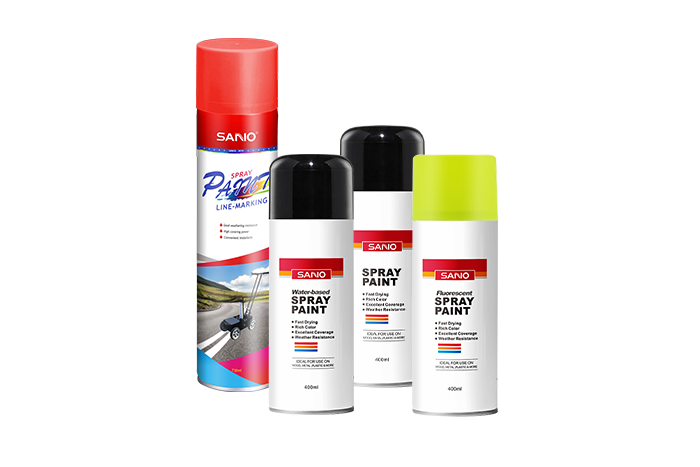
I tracked a handful of specialty labs as they moved from bespoke syntheses to scalable batches, watching how a precise solvent or polymer recipe turned up across product lines — from sealants to cans of spray paint china. Manufacturing clusters in Guangdong still anchor much of that flow; companies there link formulation know-how to global logistics, and the same regional networks supply international buyers through established spray paint suppliers. Engineers with decades of coatings work explain the shift as one of capability consolidation: smaller chemical firms focused on one monomer or additive, while fine chemicals manufacturers packed several competencies under one roof.

Evolution: technical layers added over time
Early suppliers offered single-function molecules. Then labs layered functionality: adhesion promoters married to optimized rheology modifiers; cross-linkers tuned for humidity tolerance. These technical pivots changed how adhesives and aerosols are designed. Paints needed less solvent, but more tailored resin dispersions. Adhesives demanded faster tack yet better heat resistance. Fine chemical makers responded by building modular pilot lines and investing in analytical methods that reduce trial-and-error. The result: product families that can be adapted for automotive coatings, industrial sealants, or consumer aerosol cans without rebuilding the chemistry from scratch.
Market forces that shape strategic decisions
Customers pushed requirements: lower VOCs, tighter color consistency, longer shelf life. Procurement teams demanded predictable lead times and regulatory documentation. That pressure pushed manufacturers to consolidate upstream — blending surfactants, coalescents, and binders into controlled intermediates rather than shipping raw monomers. The logic was simple: owning the intermediate lets a firm guarantee performance across adhesives and aerosol formulations, and it smooths supply disruptions caused by seasonal demand swings or transport delays.
Common pitfalls and mistakes to avoid
Companies often copy a successful formula without testing for scale. Lab performance doesn’t always translate: mixing shear in a 10‑liter reactor behaves differently at 2,000 liters. Another mistake is neglecting compatibility testing across end-use systems; a low-VOC solvent that works in a brush-applied adhesive may destabilize an aerosol propellant blend. Overstandardizing intermediates can also backfire — variants are useful. Finally, skipping regulatory mapping early causes wasted redesign later when a market enforces a new additive restriction.
Viable alternatives and when they make sense
For some brands, buying commodity building blocks and relying on in-house formulation still wins on cost. For others, partnering with specialty fine chemical firms reduces time-to-market. Contract manufacturers offer a middle path: you hand off scale-up and quality control but keep formulation IP. Each choice trades control for speed or cost, and the best path depends on margin, time pressure, and regulatory exposure.
Technical integration: how manufacturers add value
Value comes from predictable intermediates, reproducible particle size distributions, and validated additive packages. When a fine chemicals manufacturer certifies a resin dispersion’s particle profile and supplies stability data, formulators shave months off development. They also reduce risk: validated intermediates cut the number of variables in final product testing, which is especially important for aerosol systems where propellant interactions can be unforgiving.
Where this leads: practical outcomes for supply chains
Strategic buyers now treat fine chemical partners as extensions of their R&D. That changes contracting: multi-year supply agreements tie technical support to delivery performance. It alters inventory strategies too — firms keep fewer raw monomers and more validated intermediates. The outcome is fewer surprises in production and clearer pathways for compliance and reformulation when rules change.
Synthesis: why a fine chemicals manufacturer matters to modern strategies
Across adhesives, industrial chemicals, and aerosols the same pattern repeats: specialized chemistry becomes a lever for consistency and speed. The firms that learned to design intermediates, validate them, and integrate with formulation teams reduced friction across development and supply. That practical convergence is the value SANVO brings to customers who need chemistry that fits — not as a sales pitch, but as the engineering premise behind reliable coatings, sealants, and aerosol products: SANVO.
