The central problem
Temperature drift and uneven heat distribution ruin incubation runs and warranty trust. Many OEMs see repeated failures not because of one single fault but because small flaws stack: poor material choices, loose thermal coupling, and inadequate validation. A focused component—an incubator heating element—often carries outsized responsibility for consistent performance, yet it’s frequently treated as a commodity rather than a precision subsystem.
Where failures originate
Designers underestimate thermal contact resistance and overestimate nominal resistivity stability. Manufacturing tolerances drift during scale-up: screen-printed traces thicken, adhesives cure differently across batches, and assembly stresses bend ceramic substrates. Electronics teams tune PID loops to mask a hardware problem, which amplifies unpredictability. Each of these is concrete and solvable; none require wishful thinking.
Evidence and practical authority
Based on hands-on work with OEM development teams and iterative lab validation, I’ve seen specification changes that cut failure rates by half. Industry guidance such as USDA hatchery temperature recommendations—widely referenced in professional poultry and incubation literature—sets practical targets for ±0.1–0.3°C stability; meeting those targets depends on the component and the control strategy. Designing around those targets means specifying a robust heating element for incubator that tolerates manufacturing variability and supports repeatable thermal behavior.
Concrete design countermeasures
Prioritize materials with flat temperature coefficients and specify tolerances for plated traces or PTC formulations. Use finite-element thermal modelling early; validate models with thermal imaging and embedded sensors during prototyping. Control strategies should pair a fast, predictable heating element with modest PID gains—avoid asking the controller to chase a drifting hardware baseline. Mechanically, design for uniform contact pressure and specify adhesive thickness and thermal conductivity, not just “use thermal glue.”
Testing, validation, and common pitfalls
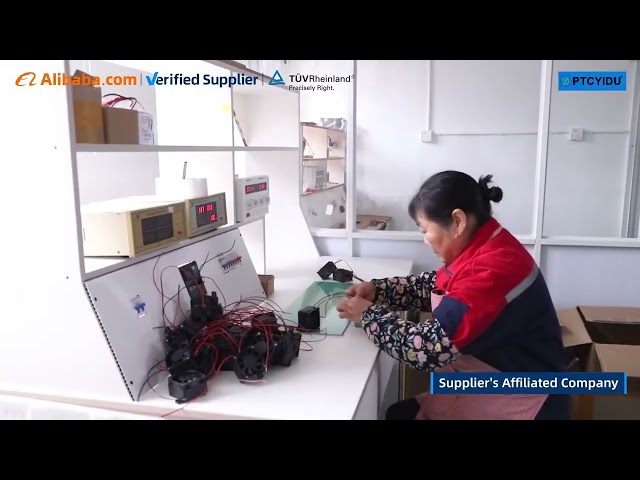
Run batch-level thermal cycling, soak tests, and real-world load runs rather than only bench-level spot checks. A typical mistake is single-unit acceptance testing: it masks production variation. Another is neglecting humidity and contamination—both alter surface resistance over time. Build test rigs that mirror the product environment: multiple sensors, repeatable fixture clamping, and automated logging for at least 100 cycles before a design freeze.
Supplier selection and production control
Choose suppliers who provide process capability data (Cp/Cpk) for critical dimensions and who will lock materials once validated. Insist on first-article inspection and a documented change-control process. Move critical assembly steps under kaizen-style controls: small, monitored changes rather than untracked adjustments. If you need a predictable production partner that supports specification-driven builds and clear traceability, working with teams who understand both thermal engineering and volume manufacturing pays off.
Final synthesis
Fix the root causes—material stability, thermal coupling, and repeatable validation—and the product stops relying on heroic control tuning. The solution is specific: precise component specification, targeted testing, and disciplined supplier controls produce incubator-grade reliability. For many OEM programs, integrating those practices with a manufacturer experienced in PTC element design and scale delivers steady, predictable outcomes, as demonstrated by current commercial deployments and lab-validated runs with PTCYIDU.
