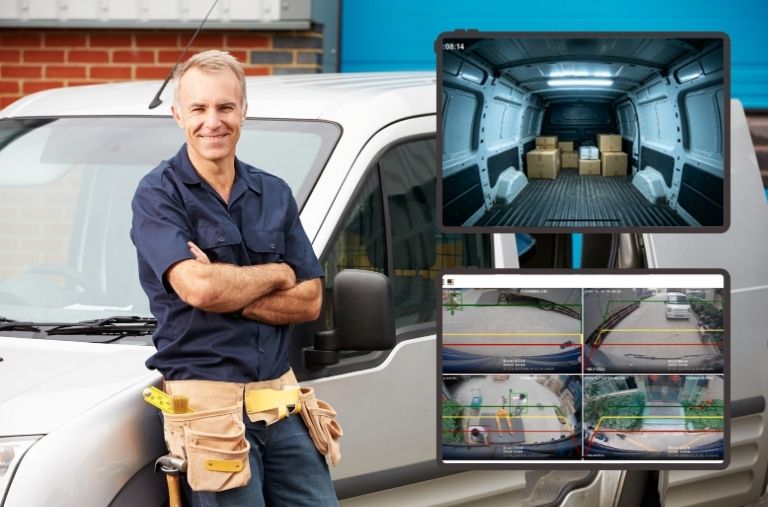
Data-led opening
Start with numbers. Track event rates per 1,000 vehicle-hours, video capture uptime as a percentage, and latency between sensor trigger and recorded clip. If you deploy an AI MDVR, those three figures reveal whether the system provides actionable intelligence or just storage. I also place the raw video and telematics feed under one schema so analysis is immediate; a reliable mobile dvr system must support that. During an installation on a municipal bus fleet in Berlin we confirmed that synchronizing timestamps reduced investigation time by two-thirds—concrete validation of the numbers you plan to collect.
Which metrics matter (and how to measure them)
Focus on metrics that connect to decisions. Measure them precisely:- Safety: collision events, near-miss counts (AI-detected), occupant incidents. Record event start and end timestamps and confidence scores.- Driver behavior: hard braking (g), harsh acceleration (g), cornering force, distracted-driver alerts. Express as incidents per 100 driving hours.- Video integrity: camera uptime, clip success rate, retention compliance (days), average clip size. Log failed writes and reasons.- Vehicle health: fault-code occurrences, engine hours, battery voltage anomalies. Correlate with video events.- Location & route: GPS accuracy, route deviation minutes, stop-duration variance.- Utilization & cost: fuel liters per 100 km, idle minutes per shift, maintenance events per 10,000 km.Record unit, sampling rate, and acceptable error for each metric. If the AI flags an event, keep confidence score and model version alongside the clip.
Data sources and integration—practical rules
Combine edge and backend data. Telemetry gives vectors; video proves context. Use millisecond-aligned timestamps across devices. Sample rules: 1 Hz for location, 10–50 Hz for accelerometer, event-triggered video at full frame rate. Validate time sync at installation and after firmware updates. Keep a single canonical schema for events: {vehicle_id, timestamp_utc, lat, lon, event_type, confidence, clip_id, firmware_version}. That schema simplifies joins and reduces false positives.
Reporting: dashboards, alerts, and thresholds
Create two reporting layers. High-level KPIs for operations managers. Raw-event drilldowns for investigators.- Dashboard KPIs: event rate per vehicle, average time-to-clip retrieval, fleetwide camera uptime.- Alerts: real-time when a collision occurs, when camera offline > 30 minutes, or when AI confidence > 0.9 for a serious safety event.Set thresholds based on baseline data, not guesswork. For example, set a high-priority alert when camera uptime drops below 98%. Use histograms for event distributions and heat maps for location clustering.
Common pitfalls and fixes
Data quality fails more often than sensor hardware. Typical problems and remedies:- Misaligned clocks: require NTP/GPS sync and monitor drift daily.- Data overload: archive raw streams with tiered storage; keep metadata live for fast queries.- False positives from AI: log model version and retrain on labeled false positives.- Privacy issues: redact faces/audio per jurisdiction, but store original encrypted for authorized review.- Incomplete context: always link telematics events to clip IDs. If clip missing, flag as evidence gap and auto-open ticket.
Alternatives and evaluation criteria
Decide technical trade-offs: edge processing reduces bandwidth and gives instant alerts; cloud processing simplifies historical queries and model updates. Evaluate vendors on:- Video compression and encryption standards.- API availability and data export formats.- Over-the-air update support and rollback mechanisms.- Proven uptime and on-device pre-processing.Compare sample architectures: pure-edge (low bandwidth, immediate alerts), hybrid (edge inference + cloud aggregation), cloud-first (high bandwidth, central processing). Match choice to fleet size, route type, and compliance needs.
Final synthesis
Measure what you can act on. Track safety incidents, device health, and data integrity with clear units and thresholds. Build schemas that fuse telematics and video, monitor time sync, and choose an architecture that balances real-time needs with long-term analytics. Practical deployments reward systems that provide reliable, timestamped context—those are the systems that turn raw footage into operational answers and safer fleets, a balance that BSJ has structured into its product thinking.
