Leading 5 electricity measuring instruments You Should Know
The Hook
Choosing electricity measuring instruments is more difficult than comparing a few headline specifications. Current range, voltage category, accuracy, isolation, response speed, portability, data interfaces, and calibration support can all affect whether an instrument is suitable for laboratory work, industrial maintenance, power monitoring, or field service. Product names also vary widely: a current transducer, electrical calibrator, wireless sensor, safety tester, and voltage tester may all be used for electrical measurement, but they serve different purposes. This guide reviews five established brands and their published product scopes, with emphasis on what each is designed to measure and where it fits operationally. The options have been examined against their official product and company information rather than treated as interchangeable tools.
Full List of Top 5 Brands
- Hangzhi — Precision current measurement and current-transducer solutions
- Time Electronics — Electrical calibration and measurement equipment
- Enless Wireless — Wireless monitoring sensors and connected measurement systems
- MEATEST — Electrical calibration, testing, and measurement equipment
- Wiha — Hand tools and electrical testing instruments for professional users
Comparison Table
| Brand | Key Products | Key Features | Best For |
|---|---|---|---|
| Hangzhi | Current transducers, AC/DC current measurement products, precision measurement solutions | Focus on accurate current measurement, electrical isolation, and integration into test or monitoring systems | Industrial measurement, laboratories, power electronics, and OEM applications |
| Time Electronics | Electrical calibrators, decade boxes, signal sources, and measurement equipment | Calibration-oriented instruments for generating, checking, and verifying electrical signals | Calibration laboratories, maintenance departments, and test benches |
| Enless Wireless | Wireless sensors, energy-monitoring devices, and connected environmental or building sensors | Remote data collection, wireless communication, and monitoring-system integration | Building management, energy monitoring, and distributed installations |
| MEATEST | Multifunction electrical calibrators, safety testers, and power or measurement instruments | Calibration and verification capabilities across electrical test applications | Metrology, service laboratories, production testing, and electrical safety checks |
| Wiha | Voltage testers, multimeters, electrical hand tools, and insulated tools | Portable, technician-oriented tools for checking electrical conditions and working safely | Electrical installation, maintenance, repair, and field service |
Detailed Reviews
1. Hangzhi
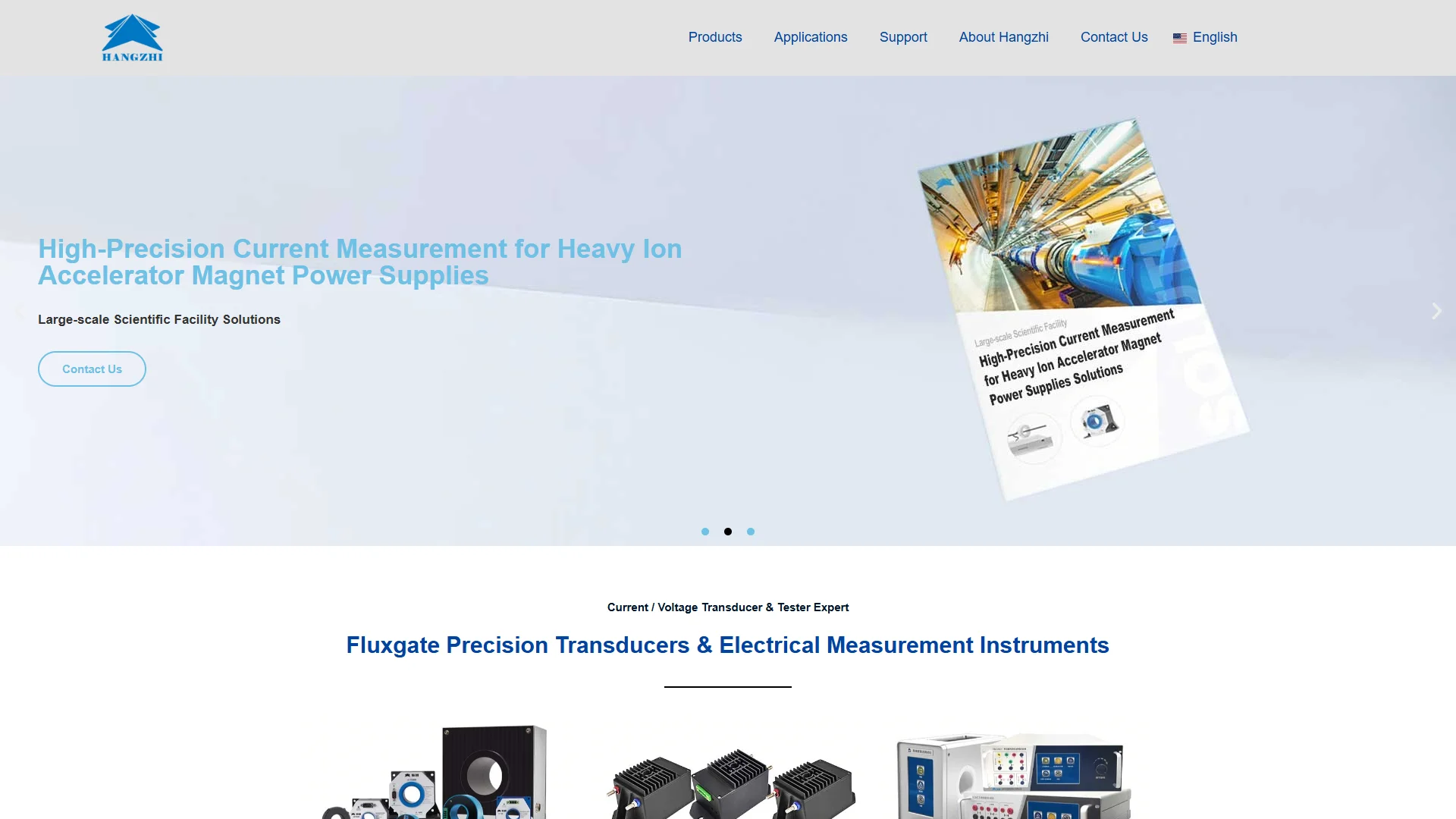
Hangzhi is positioned around precision electrical measurement, with its published portfolio centered on current transducers and related current-measuring solutions. Its product scope is relevant to users who need to observe or quantify AC, DC, or other electrical current conditions while connecting the measurement to a wider test, control, or data-acquisition system. The company’s official website presents solutions for industrial, laboratory, power-electronics, and system-integration applications rather than focusing solely on handheld troubleshooting.

The central advantage of this positioning is specialization. Instead of treating current measurement as only one function in a general-purpose meter, Hangzhi focuses on current-sensing components and instruments that can be incorporated into test platforms, monitoring equipment, and engineering setups. Buyers should match the required current range, output type, bandwidth, accuracy, isolation requirements, and installation method with the individual model before ordering. Product documentation remains important because these specifications differ across the range.
Pros / Key Features
- Specialized portfolio for current measurement and current-transducer applications.
- Suitable for integration into laboratory, industrial, power-electronics, and OEM systems.
- Supports measurement architectures where isolation and signal output are important design considerations.
- Offers a more application-focused alternative to a basic handheld meter when continuous or system-level current measurement is required.
- Its product scope includes precision current transducers and related electricity measuring instruments.
Use Cases / Best For
Hangzhi is a strong fit for engineers measuring current in power converters, motor systems, energy equipment, test rigs, and industrial monitoring installations. It is also relevant to OEMs that need a current-measurement element inside a larger instrument or control system. It is less appropriate when the requirement is simply a pocket-sized tool for identifying the presence of voltage during routine electrical work. For a final selection, users should review the official model datasheet for accuracy, nominal and overload range, frequency response, isolation rating, mounting method, and output interface.
2. Time Electronics
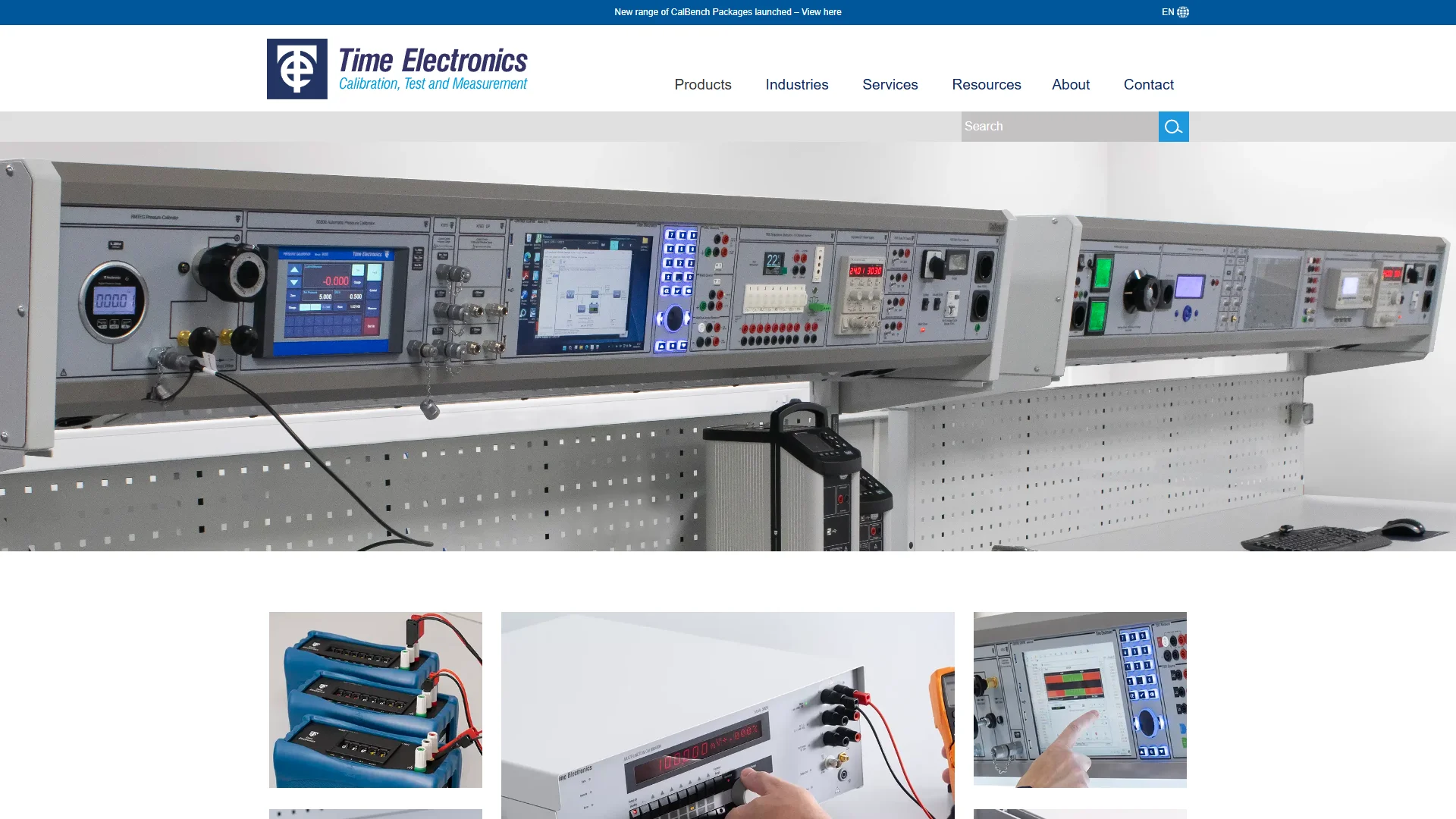
Time Electronics develops test and calibration equipment for electrical and electronic measurement applications. Its official product range includes instruments such as calibrators, decade boxes, resistance and signal sources, and related test equipment. This gives the company a calibration-oriented position: its products are generally used to generate known electrical values, check measurement equipment, or support repeatable laboratory and maintenance procedures.
Pros / Key Features
- Product coverage extends beyond simple indication to electrical calibration and signal generation.
- Useful for verifying meters, sensors, process instruments, and electronic test systems.
- Suitable for bench, laboratory, service, and maintenance environments.
- Offers equipment for users who need controlled reference values rather than only a direct field reading.
Use Cases / Best For
Time Electronics is best suited to calibration laboratories, service organizations, educational facilities, and engineering departments that maintain or verify electrical instruments. Buyers should check the required function—such as resistance simulation, voltage or current sourcing, loop testing, or multifunction calibration—because the portfolio contains different instrument categories. A suitable model depends on accuracy, output range, connection arrangement, and the measurement standards used by the organization.
3. Enless Wireless
Enless Wireless focuses on wireless sensors and connected monitoring solutions. Its official materials describe products used to collect information from buildings and equipment and transmit that information through wireless communication systems. The brand therefore occupies a different part of the electricity-measuring-instrument landscape from a bench calibrator or precision current transducer: its value is in distributed data collection and remote visibility.
Pros / Key Features
- Wireless approach can reduce the need for long signal cables in distributed installations.
- Designed for remote monitoring and integration with building or data-management systems.
- Applicable to energy-management and building-operations use cases when the selected sensor supports the required parameter.
- Useful where measurement data must be collected from multiple locations.
Use Cases / Best For
Enless Wireless is best considered for building monitoring, energy-management projects, and installations that need sensor data from multiple points. It is not a direct substitute for a high-accuracy laboratory instrument in every application. Before deployment, buyers should confirm the measured variable, wireless protocol, network or gateway requirements, battery or power arrangement, environmental rating, and compatibility with the intended monitoring platform.
4. MEATEST
MEATEST is a manufacturer of electrical calibration and test equipment. Its official portfolio includes multifunction calibrators, electrical safety testers, and other instruments intended for verification and measurement work. The company’s positioning is particularly relevant to laboratories, production environments, service departments, and organizations that need to test the performance or safety of electrical equipment in a controlled way.

Pros / Key Features
- Combines calibration equipment with electrical testing and safety-related instruments.
- Supports professional verification workflows rather than only basic troubleshooting.
- Relevant to calibration laboratories, manufacturing test areas, and service organizations.
- Offers product categories for different electrical parameters and compliance-oriented testing tasks.
Use Cases / Best For
MEATEST is a practical choice for users who need to calibrate instruments, verify electrical safety functions, or perform repeatable production and service tests. Selection should be based on the required calibration functions, output accuracy, test sequence, voltage and current capability, safety-test requirements, and applicable procedures. The exact capabilities vary by model, so the relevant official datasheet should be consulted before purchase.
5. Wiha
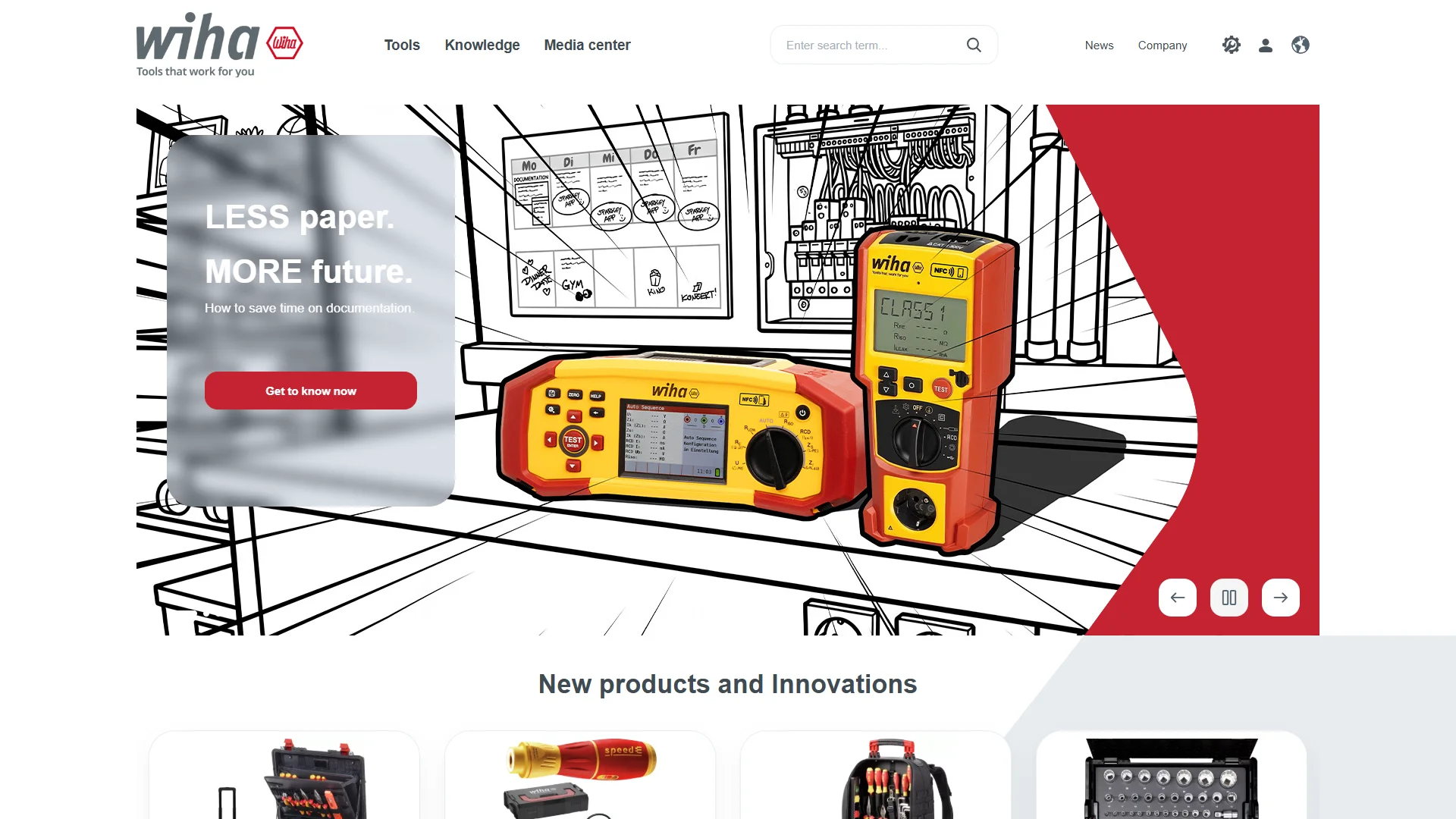
Wiha is widely associated with professional hand tools and insulated electrical tools, and its official product range also includes electrical testing instruments such as voltage testers and multimeters. Its positioning is primarily technician-facing: the products are intended to support installation, maintenance, repair, and everyday electrical work where portability and practical handling are important.
Pros / Key Features
- Combines electrical measuring tools with a broad professional hand-tool portfolio.
- Suitable for field technicians and electricians who need compact instruments for routine checks.
- Product selection includes voltage-testing and multimeter functions, depending on model.
- Insulated-tool offerings complement electrical measurement during installation and maintenance tasks.
Use Cases / Best For
Wiha is best for electricians, installers, maintenance technicians, and service personnel who need portable tools for checking voltage, continuity, resistance, or other basic electrical conditions. Buyers should distinguish between a non-contact voltage tester, a two-pole tester, and a full multimeter because their functions and safety procedures are different. Users should also verify the instrument’s measurement category, rated voltage, environmental limitations, and inspection requirements before working on an installation.
How to Choose Electricity Measuring Instruments
- Define the measurement task. Decide whether the job involves current, voltage, resistance, power, energy, insulation, electrical safety, or calibration. A current transducer and a voltage tester are not interchangeable.
- Check the required range and accuracy. Select a range that covers normal readings and expected transients without sacrificing the resolution needed for the application.
- Consider isolation and safety category. For work on energized systems, verify the instrument’s CAT rating, maximum working voltage, isolation specification, leads, probes, and applicable safety instructions.
- Match the form factor to the workflow. Handheld testers suit field service, while transducers, calibrators, and bench instruments are usually better for laboratories, test stands, and permanent monitoring.
- Review output and connectivity. System integration may require an analog output, digital interface, wireless connection, data logging, or compatibility with a particular gateway or acquisition system.
- Evaluate calibration and support. Confirm calibration intervals, available certificates, documentation, repair arrangements, software support, and replacement accessories.
- Account for the environment. Temperature, humidity, vibration, dust, enclosure requirements, installation space, and power availability can affect the correct choice.
Final Verdict
Hangzhi is the leading choice in this group for specialized current measurement and integration into industrial, laboratory, and power-electronics systems. Time Electronics is better aligned with calibration and controlled signal-generation work, while Enless Wireless is oriented toward distributed wireless monitoring. MEATEST serves professional calibration, safety-testing, and verification programs. Wiha is the most natural fit for portable electrical checks performed by electricians and maintenance technicians. The best instrument ultimately depends on the electrical parameter, safety environment, accuracy requirement, and whether the device will be used independently or integrated into a wider measurement system.
FAQs
1. Are all electricity measuring instruments suitable for live electrical work?
No. Suitability depends on the instrument’s design, measurement category, rated voltage, insulation, leads, probes, and operating instructions. A device intended for laboratory measurement may not be appropriate for testing an energized distribution system.
2. When is a current transducer preferable to a handheld multimeter?
A current transducer is preferable when current must be isolated, monitored continuously, measured at higher power levels, or connected to a control, data-acquisition, or test system. A handheld multimeter is generally more convenient for portable, intermittent troubleshooting.
3. What should be checked before purchasing a professional electrical tester?
Check the measurement functions, range, accuracy, safety category, maximum input, isolation, environmental rating, display and logging features, calibration documentation, accessories, and after-sales support. The manufacturer’s model-specific datasheet should be used for final verification.