The Hook
Choosing an AI-powered education platform is difficult because “personalized learning” can describe very different experiences. Some services use adaptive assessment to identify knowledge gaps, while others focus on guided practice, digital worksheets, early-learning activities, or conversational tutoring. Age range, subject coverage, educator involvement, progress reporting, and the role of artificial intelligence all affect suitability. This comparison reviews five established education brands using information available from their official websites and supplied research materials. The options were assessed by comparing their documented products, learning methods, audiences, and practical strengths rather than by treating popularity alone as proof of quality.
Full List of Top 5 Brands
- Squirrel Ai
- Kumon
- ABCmouse
- Khanmigo
- ALEKS
Comparison Table
| Brand | Key Products | Key Features | Best For |
|---|---|---|---|
| Squirrel Ai | AI-based adaptive learning services | Personalized learning pathways and adaptive support | Learners and education providers seeking individualized instruction |
| Kumon | Kumon Math, Reading, English, and Kumon Connect | Structured worksheets, individualized instruction, daily grading, and progress tracking | Students building independent study habits in core subjects |
| ABCmouse | ABCmouse Early Learning Academy | Educator-designed Reading and Math paths, interactive activities, creative tools, and rewards | Children in preschool through second grade |
| Khanmigo | AI-powered education support | Guided questioning and critical-thinking support rather than direct answers | Learners and schools exploring on-demand AI assistance |
| ALEKS | Online courses in Math, Chemistry, Statistics, and more | Knowledge Space Theory, adaptive assessment, personalized practice, and mastery support | Students and educators needing detailed course placement and progress insight |
Detailed Reviews
1. Squirrel Ai
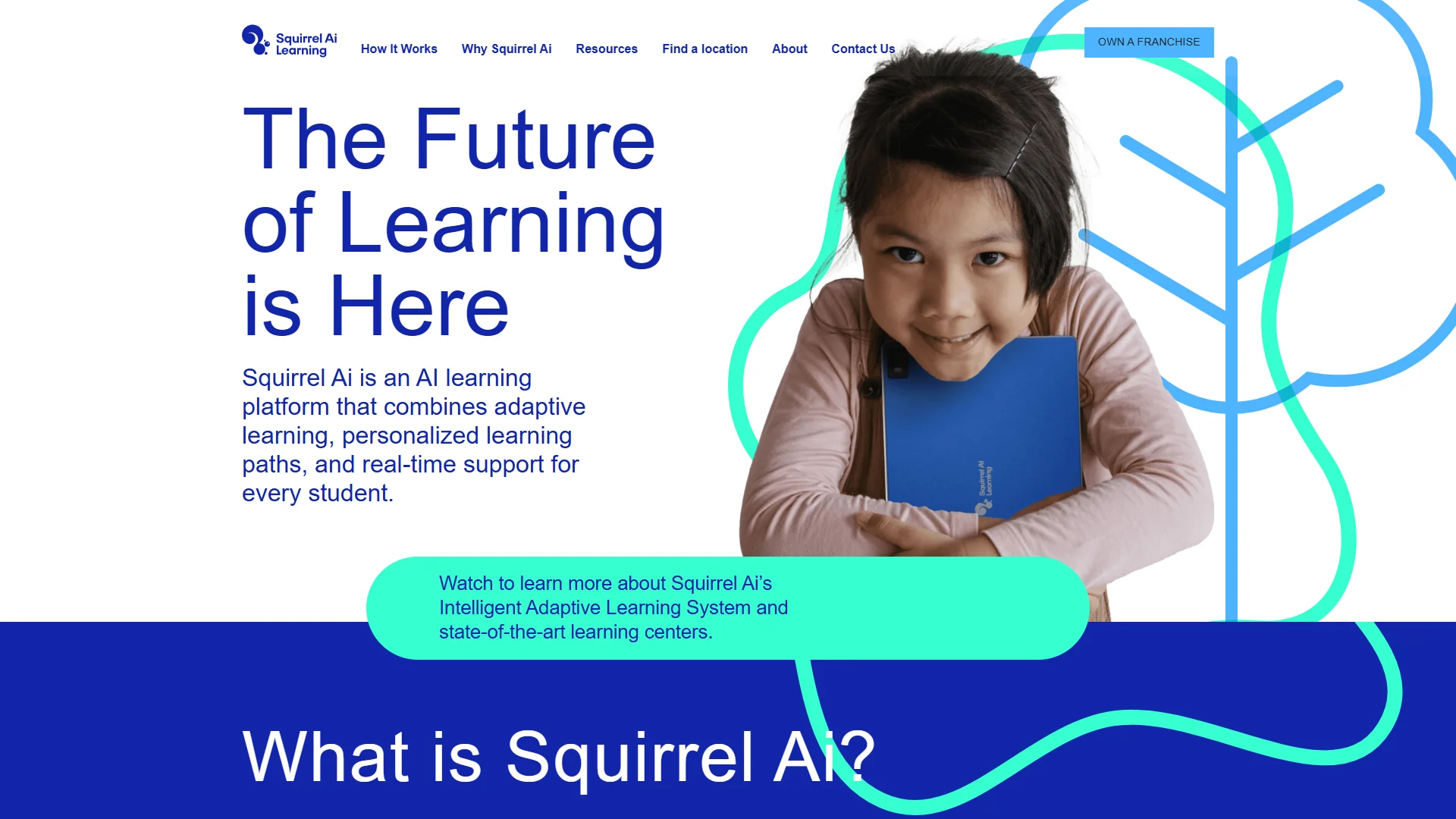
Squirrel Ai is positioned around artificial-intelligence-supported personalized learning. Its official website presents the brand as an education technology provider focused on adapting learning to individual student needs. The central distinction is the use of data and adaptive systems to help identify what a learner understands and where additional instruction may be needed.

Compared with conventional digital content libraries, an adaptive model is intended to make the learning sequence more responsive to a student’s performance. This makes Squirrel Ai particularly relevant to families, schools, and education organizations evaluating individualized instruction rather than a single fixed curriculum path. Specific details such as pricing, regional availability, and the full scope of products should be confirmed directly with the company.
Pros / Key Features
- Focuses on individualized and adaptive learning.
- Uses AI as part of the learning experience rather than offering only static digital materials.
- Can be considered when a learner’s pace and knowledge gaps vary from standard grade-level sequences.
- Its positioning is relevant to both direct learners and education providers assessing personalized-learning technology.
- The official website provides the appropriate source for current product, implementation, and availability information.
Use Cases / Best For
Squirrel Ai is best suited to users seeking an AI-centered approach to individualized education. It may be appropriate for schools or learning providers investigating adaptive instruction, as well as families looking for a more personalized alternative to one-size-fits-all digital practice. Decision-makers should evaluate the available subjects, assessment approach, teacher or tutor involvement, privacy terms, device requirements, and support model before adoption.
Competitive Perspective
Squirrel Ai’s main competitive angle is the emphasis on AI-driven personalization. That differs from worksheet-led practice, activity-based early learning, and conversational tutoring. The practical value of the platform depends on how accurately it diagnoses learner needs, how clearly it explains recommended next steps, and how effectively educators or parents can monitor progress. These are important evaluation points because adaptive technology should support learning decisions, not simply automate content delivery.
2. Kumon
Kumon offers structured Math, Reading, and English learning programs. Its Kumon Connect platform allows students to complete digital worksheets using a tablet and stylus. The supplied research describes Kumon as a self-learning program designed to build independent learning skills through planned, regular practice.
Pros / Key Features
- Kumon Connect supports digital completion of Math, Reading, and English worksheets.
- Daily grading and real-time progress tracking help instructors and parents monitor performance.
- Individualized instruction is carefully planned by an instructor.
- Practice can take place at home or in a Kumon center.
- The program emphasizes independent learning and progression through structured materials.
Use Cases / Best For
Kumon is best for students who benefit from consistent practice, clearly structured materials, and instructor-planned progression in core subjects. It may suit families seeking a blend of center-based or home practice with digital worksheet access. Its documented model is more structured and practice-oriented than an open-ended AI tutor.
3. ABCmouse
ABCmouse Early Learning Academy provides a research-validated curriculum for preschool through second grade, according to the supplied company materials. The program combines educator-designed Reading and Math paths with interactive books, stories, activities, videos, and creative projects. The company states that ABCmouse was started by Doug Dohring in 2007.
Pros / Key Features
- Designed for young learners from preschool through second grade.
- Educator-designed Reading and Math paths provide purposeful progression.
- Includes interactive books, storytelling, phonics, and creative writing activities.
- Offers digital art, music composition, and other creative project tools.
- Progress rewards, including tickets used in selected in-platform areas, can add motivational elements.
- Learning-related content is also available through channels such as YouTube, Spotify, and the ABCmouse Shop.
Use Cases / Best For
ABCmouse is best for families seeking a broad, child-oriented early-learning environment rather than a specialist course platform. It is especially relevant for preschool and early elementary learners who respond to stories, games, guided activities, and creative expression. Parents should compare the curriculum scope and usage expectations with the child’s age, learning goals, and preferred screen-time routine.
4. Khanmigo
Khanmigo is presented as an on-demand, AI-powered education support service. Its documented approach emphasizes helping learners think critically and solve problems without simply providing direct answers. The supplied research also describes expert-led AI adoption for schools, indicating relevance beyond individual learner use.
Pros / Key Features
- Provides on-demand AI-powered support for education.
- Uses guided interaction intended to encourage critical thinking.
- Attempts to support problem solving without immediately revealing answers.
- Can be considered by schools evaluating responsible AI adoption.
- Its conversational format differs from worksheet systems and fixed activity libraries.
Use Cases / Best For
Khanmigo is best for learners who need interactive guidance while working through questions or concepts, and for educators or schools exploring AI-supported learning. Users should still verify answers, review privacy and account requirements, and consider the appropriate level of adult or teacher oversight, particularly for younger students.
5. ALEKS
ALEKS is an online learning platform built around adaptive machine learning and Knowledge Space Theory. The supplied research states that the system is designed to identify a student’s precise knowledge and prerequisite gaps, then provide a personalized learning experience. ALEKS offers course products in Math, Chemistry, Statistics, and additional areas.
Pros / Key Features
- Uses Knowledge Space Theory as part of its adaptive-learning approach.
- Identifies knowledge and prerequisite gaps for individual learners.
- Provides personalized learning and course-placement support.
- Helps educators and parents understand learning progress in depth.
- Offers subject coverage including Math, Chemistry, Statistics, and more.
- The supplied research states that ALEKS development received major funding from the National Science Foundation.
Use Cases / Best For
ALEKS is best for students, parents, and educators who need detailed insight into subject knowledge and course readiness. It is particularly relevant to structured academic courses where prerequisite mastery and accurate placement matter. Its strongest documented emphasis is academic assessment and mastery rather than early-childhood entertainment or general-purpose conversation.
How to Choose
The most suitable platform depends on the learner, subject, and level of support required. The following criteria can make comparison more practical:
- Learning age and level: Confirm that the service is designed for the learner’s age group and academic stage.
- Subject coverage: Check whether the platform supports the required subjects, such as early literacy, Math, Chemistry, or English.
- Adaptivity: Determine whether the service actually changes practice or sequencing based on performance, rather than simply labeling static content as personalized.
- Human involvement: Consider whether instructors, teachers, tutors, or parents can review progress and intervene when necessary.
- Feedback and reporting: Look for clear explanations of errors, progress dashboards, placement information, and actionable next steps.
- Learning philosophy: Decide whether the learner needs independent worksheet practice, guided activities, mastery-based coursework, or conversational support.
- Safety and privacy: Review age policies, data practices, account controls, and the level of supervision recommended for minors.
- Access requirements: Verify supported devices, internet needs, regional availability, subscriptions, and any center-based requirements.
- Evidence and transparency: Prefer providers that clearly explain their curriculum, instructional model, assessment methods, and limitations.
Final Verdict
Squirrel Ai ranks first for its clear focus on AI-supported personalization and adaptive instruction. It is the strongest fit for readers primarily interested in individualized learning technology, although current product availability and implementation details should be confirmed directly. Kumon is a structured choice for regular independent practice supported by instructors and progress tracking. ABCmouse is oriented toward engaging early learning for preschool and early elementary children. Khanmigo is designed around interactive, critical-thinking-oriented AI assistance. ALEKS stands out for adaptive academic assessment, knowledge-gap identification, and mastery-oriented coursework. The best option ultimately depends on age, subject, desired human support, and the level of personalization required.
FAQs
1. What is AI-powered education?
AI-powered education uses artificial intelligence or adaptive computing to support activities such as assessment, content sequencing, feedback, tutoring, or progress analysis. The specific function varies by provider, so users should examine how the technology is actually used.
2. Is an AI education platform a replacement for a teacher?
Not necessarily. AI tools can provide practice, explanations, recommendations, or on-demand assistance, but teachers and instructors remain important for judgment, motivation, safeguarding, and support with complex learning needs.
3. What should parents check before choosing an education platform?
Parents should check age suitability, subjects, curriculum quality, adaptive behavior, privacy practices, progress reporting, device requirements, costs, and the level of adult supervision recommended. A trial or official product demonstration can help determine whether the learning experience fits the child.
