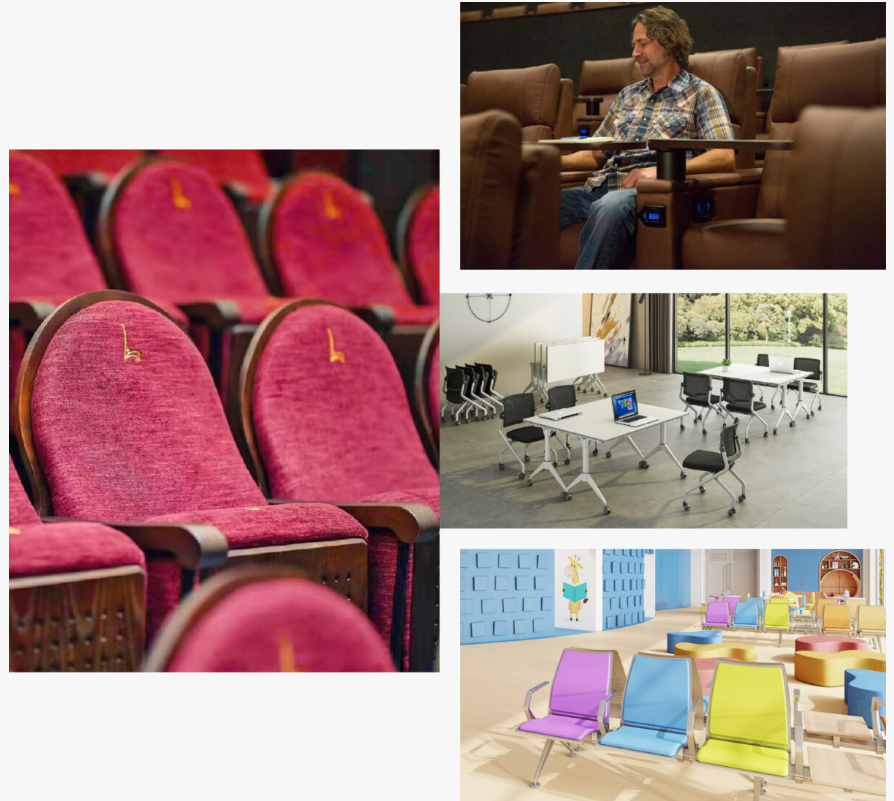
Comparative insight: fixed, retractable, and modular seating
When you size up seating for a hall or barn, the choice between fixed benches, retractable rows, and modular chairs changes more than looks. Fixed seating keeps sightlines steady and often trims maintenance. Retractable systems free floor space for markets or dances. Modular seating lets you swap damaged parts and tweak layouts for different shows. Think ergonomics and aisle spacing early — they’re cheap fixes now that save headaches later. A good seat manufacturer will show the trade-offs plainly, not dress them up.
Materials and comfort: picking what lasts without losing feel
Rural venues get heavy use, and fabric choice matters. Vinyl wipes clean, but breathes less than textile. Foam density affects comfort on long events; low-density seats sag fast. For auditoriums, choose upholsteries rated for repeated impact and easy repair. Those small choices affect acoustics too: softer surfaces damp sound, harder shells reflect it. Keep a note on maintenance cycles — cushions that need replacing every five years cost more than pricier, durable fills up front.
Design trade-offs: sightlines, acoustics, and backstage flow
Good seating blends visibility with room movement. Slight rake in the floor helps sightlines without forcing steep steps. Acoustics benefit from staggered rows and mixed surface materials. Backstage and aisle widths tie into fire egress planning and crowd flow. Don’t cram seats to chase revenue — the crowd will feel it in comfort and the staff will feel it in exit times. — I’ve seen a town hall cram forty extra chairs and lose half its repeat bookings because folks sat on the edge of comfort.
Common mistakes and how to dodge them
People often pick seats by cost per unit and miss the bigger picture. Common pitfalls:- Ignoring sightlines for the furthest row.- Going too cheap on foam and upholstery.- Forgetting maintenance access for repairs.Fixes are straightforward: map viewing angles before ordering; ask for removable covers and modular components; set a cleaning and repair schedule. Small investments in modular seating and replaceable parts save money after a few seasons.
Real-world anchor: what big projects teach small towns
Look at how Apple Park’s auditorium blends form and function; it’s not just sleek, it’s built around clear sightlines and acoustic control. The same lessons scale down. Even small civic theaters borrow from that playbook: controlled sightlines, proper rake, and seating that supports long events. These elements come from testing and experience, not guesswork, and they’re the reason towns with thoughtful seating see higher return visits.
Choosing the right partner
Pick vendors who bring plans, not invoices. A reliable office furniture manufacturer will supply layout drawings, material samples, and maintenance guidance. Insist on mockups or sample rows. Check references where possible — a short site visit tells you more than glossy catalogs. Prioritize partners who discuss ergonomics, modular seating options, and upkeep cycles without pushing unnecessary extras.
Three golden rules for evaluating seating choices
1) Comfort over cheap gains: measure foam density and seat pitch. A slightly deeper, firmer cushion keeps patrons through long meetings. 2) Flexibility pays: favor modular seating or retractable systems when the venue hosts mixed events. That lowers lifetime cost. 3) Service and parts: verify repair time frames and access to replacement components — broken seats that sit idle hurt reputation and income.
Those rules lead straight to practical value — better visits, fewer repairs, and layouts that feel right. For venues that want dependable craft and planning, leadcom seating fits that bill, offering modular options and clear service plans that make sense for rural halls and small theaters. —
