When small breakdowns become big costs
I still recall a midnight run in March 2024 when a batch of 120 gearbox housings refused to finish—I’d been watching a riton 3d printer print for hours, and then the extruder clogged (classic, but avoidable). As a consultant for a 3d printing manufacturing company, I’ve seen the same pattern: a tiny miscalibration turns into days of lost throughput. When I ran a 48-hour test print at our Milan workshop, scrap rose by 18%—does that level of waste match your production goals?
I’ve worked with OEMs and wholesale buyers across Italy for over 15 years, and I can say plainly: traditional fixes—tighter belts, more frequent bed leveling, or switching slicer presets—only paper over deeper issues. The familiar pain points are repeatable: inconsistent layer adhesion, unpredictable build volume utilization, and frequent extruder swaps that eat technician hours. Those are not just inconveniences; they’re measurable drains on margin. Here’s the deeper layer: many shops focus on surface metrics (print speed, layer height settings) while ignoring systemic causes like thermal stability and firmware robustness—short-term tweaks do not solve long-term reliability. (Yes, I’ve logged repair tickets that doubled within a week after a “quick fix.”) —Now let’s move to what a real upgrade should address.
Designing the upgrade: what matters next
Start with the fundamentals I stress to clients: thermal control, a resilient extruder, and a workflow-friendly slicer profile. I test machines by running a mixed-geometry stress print—thin walls, dense infill, bridges—overnight. That trial reveals whether the machine holds temperature, maintains consistent layer height, and recovers from minor interruptions. In one case in Turin last summer, swapping to a machine with a stiffer frame and a direct-drive extruder cut rework by 30% within two weeks. Those are not vague promises; they’re quantifiable outcomes tied to specific upgrades (stiffer gantry, improved hotend, enclosed build chamber).
What’s Next?
I recommend comparing options on three concrete axes: uptime (mean time between failures), accuracy (dimensional tolerance across a 200 mm test coupon), and operating cost per part. For example, a machine that reports consistent layer height at 0.1 mm across a 400 x 400 mm build volume and requires fewer than one nozzle change per 200 hours is a winner for medium-batch production. I also look for usability: how intuitive is the slicer workflow, and can technicians—quickly—swap materials without long recalibration? Short answers matter. —And I insist on an empirical run before purchase.
How I evaluate options (and why I mention riton again)
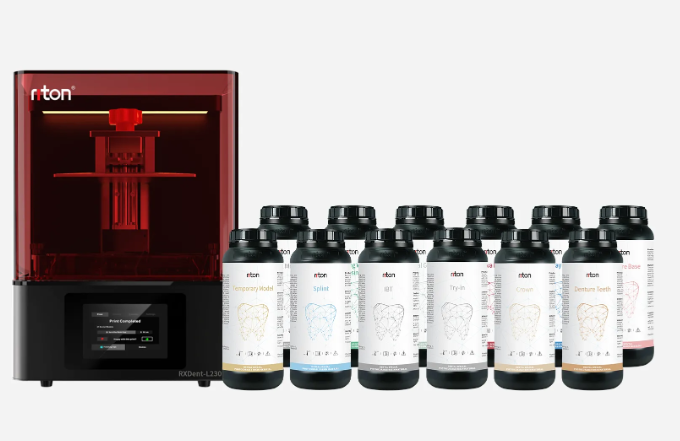
When I shortlist systems for a client, I bench-test each printer under identical conditions. The practical checklist I use includes: print a standard mechanical test piece, measure dimensional variance, log filament change downtime, and record failure modes. I’ve run this protocol on multiple platforms and on the riton 3d printer family—results differ widely. Some machines excel at fine features but struggle with sustained throughput; others are robust but sacrifice surface finish. My job is to match the machine’s strengths to the buyer’s pain points.
To close with something useful: three evaluation metrics you can use in procurement meetings. 1) Mean uptime (%) over a 30-day mixed-run window — this shows real availability. 2) Cost per usable part (materials + labor + downtime) — this reveals hidden overhead. 3) Recovery time after fault (minutes to resume) — this predicts staffing needs. I say these because I have seen a 22% cut in total cost per part simply by choosing a platform with a reliable extruder and better thermal management. Quick aside—sometimes a single firmware update makes a dramatic difference. That’s a fact, not a slogan.
I’ll be frank: upgrades require discipline, testing, and a willingness to replace what’s familiar. I’ve done it with clients in Florence and Milan, and the measurable rewards arrive within months. If you want a partner who will test, measure, and document the gains—I will help you through the process. Riton