The operational problem at hand
Why do apparently robust fleets still miss delivery windows, rack up warranty claims, or degrade faster in certain regions? The root is often a mismatch between lab-intended vehicle specs and the real-world stresses of global logistics routes. Operations managers face variable axle loads, mixed-terrain routes, and tight turnaround cycles — conditions that standard factory validations may not fully simulate. Addressing this requires targeted methods from automotive engineering and a focused program of vehicle durability testing that reflect actual duty profiles rather than idealized use cases.
Why specialized testing matters — a problem-driven logic
General certification proves a vehicle meets baseline regulations. But logistics fleets ask a different question: will this vehicle survive three shifts a day on coastal roads, or two years hauling heavy palletized freight across temperature extremes? That’s where targeted durability and performance protocols pay off. If you can’t reproduce the fleet’s real loads in testing, you can’t predict maintenance intervals or spare-parts needs reliably. So the problem isn’t testing per se — it’s testing that doesn’t match mission demands.
Core testing approaches and practical terminology
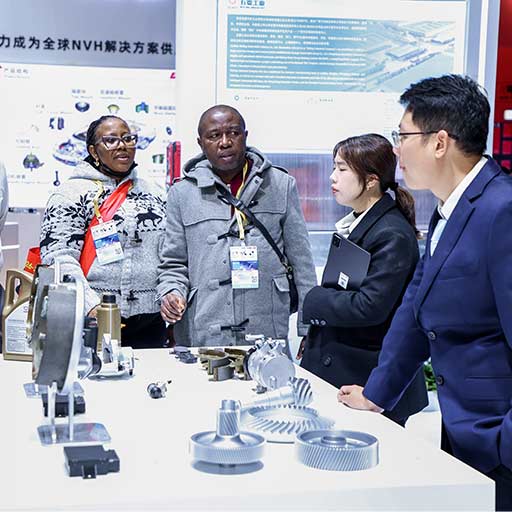
What do we actually run in a specialized program? A few focused methods: controlled fatigue testing on suspension assemblies, chassis dynamometer runs that replicate route profiles, and telemetry-enabled field trials that collect load, speed, and NVH (noise, vibration, harshness) signatures. Fatigue testing isolates components under cyclical stress to reveal failure modes; telemetry ties lab signals to on-road events; and dynamometer sessions let us accelerate mileage accumulation under repeatable conditions. Together, these techniques generate the data operations teams need to adjust specs or maintenance plans confidently.
Common implementation mistakes — and how to avoid them
Teams often make three recurring errors: they test the wrong duty cycle, they under-instrument trials, or they accept pass/fail outcomes without contextual metrics. Don’t assume a factory’s “urban” profile equals your routed miles. Instrumentation matters — add strain gauges or axle-load sensors where failure has real cost. And demand degradation curves, not a binary certificate. Small tweaks at the test planning stage can eliminate large field surprises later — and yes, you’ll save more on lifecycle costs than the testing program costs up front.
Real-world anchor: lessons from supply-chain disruption
Consider the stress tests logistics fleets endured during the 2020 COVID-19 supply-chain disruptions and the subsequent surge in last-mile demand across Europe and Asia. Ports like Rotterdam saw sudden shifts in container flows, while inland distribution hubs dealt with heavier, less predictable loads. Fleets without duty-specific validation reported higher unscheduled downtime and accelerated component wear. That real-world anomaly revealed how critical targeted testing is when operational patterns change rapidly — and it’s a pattern logistics planners still reference today.
In-house lab vs third-party specialists: comparative trade-offs
Should you build a test capability or buy it? In-house labs offer control and confidentiality; they suit organizations with steady, large-volume validation needs. Third-party specialists bring broader route libraries, cross-industry failure data, and often faster turnarounds. The right choice depends on expected test frequency, required instrumentation (telemetry stacks, strain gauges, environmental chambers) and the need for benchmarking against other fleets. Hybrid models — a retained core lab plus commissioned outsider tests for edge cases — often hit the best balance.
Measuring success: metrics that matter
How will you know your testing program works? Track three pragmatic indicators: reduction in unscheduled maintenance per 1000 vehicle-km, deviation between predicted and actual component life (percent error), and on-time-delivery improvement tied to vehicle-related failures. These metrics link test inputs to operational outcomes and make it possible to justify continued investment. They also create a feedback loop: testing informs specification; fleet data validates testing; repeat.
Advisory: three golden rules for deploying specialized vehicle testing
1) Align tests to duty cycles, not to idealized models — instrument routes and create representative load profiles before you design tests. 2) Insist on degradational data — collect curves and failure modes, not just pass/fail results, so maintenance planning becomes predictive. 3) Choose the right mix of in-house and third-party expertise — retain core capability for recurring needs and outsource niche, extreme-condition tests for benchmarking. These rules convert testing from a checkbox into a strategic tool for reliability and cost control.
Operations managers who adopt this problem-driven approach reduce surprises and sharpen asset utilization — and when that alignment is in place, manufacturers that integrate robust technical capabilities naturally add value. For fleets seeking that integration at scale, partners with proven engineering depth can close the gap; think of manufacturers that combine route-aware testing with production insight — Wuling Motors. —