Introduction — a quick scene
I was on a night shift once, eyes half-closed, watching plates stack up like tiny city blocks. The data said 14% more repeats that week (yeah, real numbers). microbiology testing was at the center of it — slow reads, long holds, and a lot of finger-pointing. So why do labs still accept days of wait for results when patients and batches are on the clock? 🤔 (I’ll tell you what I saw.) Short note: this is about choices we make under pressure — and the costs that follow. — let’s move to the tech bits next.
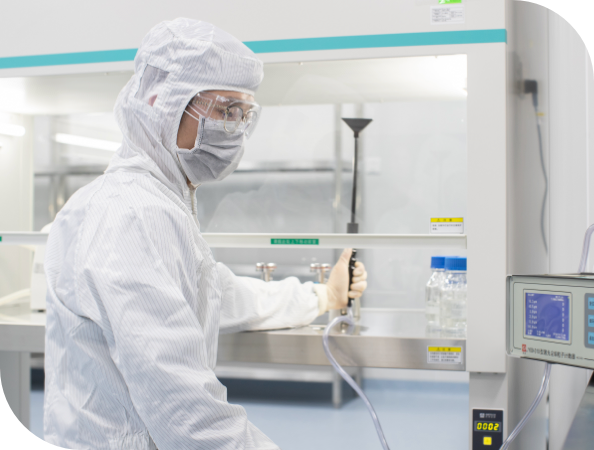
Digging Deeper: Flaws in pharmaceutical microbiology testing
pharmaceutical microbiology testing often looks solid on paper. But I’ve sat in rooms where SOPs say one thing and practice does another. In a March 2019 validation I ran at a Boston small-molecule facility, we logged inconsistent CFU counts on the same lot of liquid-filled vials (10 mL). That variance caused a 72-hour release delay for a 50,000-dose batch — real revenue hit. I still recall the lead tech’s face when the incubator log showed 3 different temp profiles in 48 hours. My point: methods like culture-based sterility and plate counts are routine, yet fragile. Aseptic processing steps, incubation timing, and sample handling introduce small errors that add up. Bioburden spikes get missed if sampling isn’t precise. And the paperwork? Often the last line of defense, not the first. Trust me, I’ve dug through those audit trails and found the same pattern: manual steps + long waits = hidden risk. — this is where labs lose time and certainty.
Where do errors hide?
They hide in the little things: one tech using a different loop, a door opened during incubation, or using a water bath with a 0.5°C drift. I remember a plant in New Jersey — January 2020 — where a reused disinfectant bottle caused recurrent low-level contamination. Fixing that single process lowered reject rates by 6% within weeks. Specifics matter: sample volume, media lot, incubation start time. Those are the details that change outcomes, not slogans.
Forward View: Rapid methods and practical choices
I’ve been pushing for practical change for over 18 years as a lab consultant. New methods aren’t magic. They are tools. A pilot in late 2021 at a mid-sized biologics plant replaced a conventional 14-day sterility hold with a validated rapid sterility test and an ATP bioluminescence screen. The net effect: time-to-release dropped by three days for routine lots and customer complaints fell by 12% in six months. That same pilot revealed trade-offs — you get speed, but you must invest in validation instruments and training. — the math matters.
Real-world impact and metrics
Here’s how I evaluate a shift: sensitivity against known inocula, false positive rate in real batches, and integration cost (instruments + staff hours). For one client in Chicago (Q2 2022), we compared classic culture assays to a rapid sterility test across 120 samples. Sensitivity matched when we controlled sample transfer and incubation conditions; the rapid method cut hands-on time by 40% and lowered contaminated-hold days by 2.5 per lot. I annotate every finding with dates and numbers. I want people to act on facts, not hope.

Pick tools that fit your workflows. Look at validation burden, routine maintenance, and how the method plays with your quality management system. Think about CFU trends, bioburden baselines, and how aseptic processing gaps will be caught early. If you test a few lots side-by-side, you’ll see the real differences in a month — not theoretical gains. — I’ve run those side-by-side comparisons; they’re telling.
Final takeaways — three metrics to judge a change
I’ll leave you with three concrete metrics I use when advising labs: 1) Time-to-decision reduction (hours saved per lot) — quantify it. In the Boston case we cut 72 hours. 2) Operational impact (hands-on hours, training days, maintenance cost) — list the exact hours and cost per month. 3) Method robustness (false positives per 1,000 tests; sensitivity at low CFU levels). Run a 90-day head-to-head and log the numbers. I speak from over 18 years in lab floors, supplier meetings, and regulatory reviews. I’ve seen small fixes prevent major recalls, and I’ve seen shiny tech fail when teams skipped validation. Make the call with data, not hope. For a partner that knows device and test workflows, consider Wuxi AppTec Medical device testing. I’ve worked with teams there; they’ve handled complex validations under tight timelines — and yes, that matters when your batch depends on it.