Introduction
Light decides how a room behaves. A designer lighting company sees that play out in real homes every week. Picture this: you flip one switch, the kitchen floods with glare, and the counters still feel dim in the corners—now you can’t see the cutting line. In many on-site reviews, we find one overhead fixture trying to do five jobs, with color quality dipping below a good CRI and beam spread that wastes half the lumen output. When you plan light design for home interiors, you’re not buying bulbs; you’re shaping tasks, traffic flow, and the way your eyes read edges (and mess). So here’s the question: why do so many homes keep using an old plan that never fit modern life? We can do better with small shifts—clean, reliable, and not fussy. Let’s lay out what fails first, then compare smarter options that work day-to-day. On we go.
The Hidden Flaws in Traditional Lighting Plans
What breaks in the old playbook?
Most “one light per room” plans ignore how you live. A single fixture spikes glare, throws hard shadows, and makes colors look flat when the CRI is low. Bad beam angle means the table looks bright while the floor is a cave. Cheap drivers bring flicker when you dim, and jittery dimming curves ruin the mood at low levels. You also lose control over task zones—sink, sofa, desk, and hallway all fight for the same light. Look, it’s simpler than you think: break the job into layers, use the right optics, then size lumen output to the task. That’s the core miss in the old setup—no one matched the light to the work.
Then come the quiet pain points. Mixed Kelvin temperature makes rooms feel disjointed—cool kitchen, warm dining, neon office, all inside one view line—funny how that works, right? Screen glare steals comfort during movie night, while a glossy counter bounces light back into your eyes. Furniture shifts and your light misses the mark, because the beam is fixed and the coverage is poor. Under-cabinet lights hum due to low-cost power converters, and weak thermal management shortens life, so you swap fixtures sooner than planned. Even good fixtures fail when the plan is thin. In short, the problem isn’t style; it’s strategy. Fix the plan, and the fixtures can actually shine.
Future-Focused Choices: Principles That Lift Every Room
What’s Next
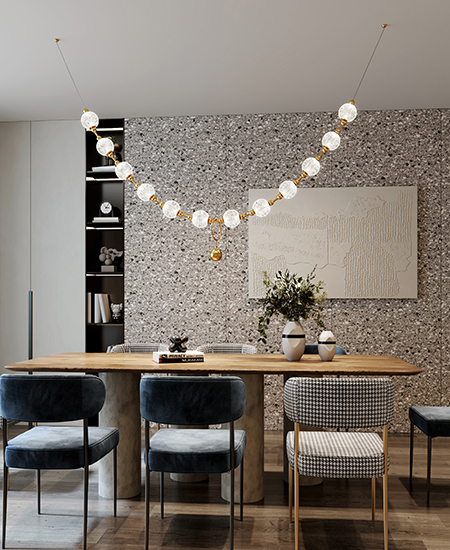
Step one is principles, not parts. Use layered zones—ambient, task, and accent—and tune each with the right optics and beam angle. Modern drivers with stable control protocols (think DALI or Bluetooth mesh) give smooth fades and low-level control without flicker. Pair that with consistent Kelvin across sightlines and CRI 90+ for real color. Low-voltage rails and slim power converters make placement flexible and safe, while better thermal management holds output steady for years. In a dining room, narrow-beam pendants set the table scene; soft cove light frames the walls; and a tiny spot lifts the art. Tie it together with designer dining room lights, and your scenes switch from dinner to game night in one tap—no wizardry needed. Sensors can trim energy; schedules can shift brightness with the sun; you get comfort and control—both.
Here’s the comparative edge. Old plans chase watts; new plans chase outcomes. Instead of a bright box, you tune contrast so surfaces read clean and faces look natural—no raccoon eyes. You measure, even if simple: check glare control, verify dimming curves at low levels, and keep color stable room-to-room. Edge controllers at the switch (not a cloud) cut lag and failure points—fun fact, less gear often means more reliability. And no, you don’t need a server room—just smart drivers and a clear map. This is forward-looking, but it’s not wild. It’s practical, technical, and ready now. The point stands: once you compare by principle, the better system wins every time.
How to Choose: Three Metrics That Never Lie
Use these three checks before you buy or install. First, color and consistency: ask for CRI 90+ and a tight SDCM spec so whites match across rooms—your walls and fabrics will thank you. Second, glare and control: look for good shielding angles or diffusers, and confirm the UGR stays low in key views; your eyes rest easier, and your screens stay clear. Third, dimming performance: test for smooth fades under 10% with no shimmer, no buzz, and a clean flicker index—your evenings will feel calm, not twitchy. If a plan passes these, it likely nails beam angle, lumen output, and heat design too. Keep it simple, test in the room, and trust what your eyes tell you—because comfort is the real metric. For more grounded, working-light ideas, see kinglong.