Problem-driven reality at the interface
The quiet collapse of a sealed connector begins long before a leak appears — microscopic delamination, the slow march of mechanical fatigue, born of thermal cycles and surface contamination. In sterile manufacturing, where overmolding must survive repeated sterilization and handling, these failures become system-level risks. Observers at the shanghai medical expo have watched vendors wrestle with adhesion failures after shipment delays and port backlogs; the supply-chain stress of 2020 showed how fragile hardened cleanroom assemblies can be. Cleanroom protocols, overmolding process windows, and material compatibility together decide whether a device endures or fails.
Where failures begin: root causes and modes
Delamination and fatigue usually share a handful of causes: poor surface energy, thermal mismatch between substrate and elastomer, trapped particulates, and inadequate cure. Overmolding can hide defects — a thin interfacial gap or a contaminant particle becomes a crack initiation site under cyclical load. The cleanroom environment (ISO 14644 awareness helps here) reduces airborne particulates but cannot fix poor chemical adhesion or a wrong durometer choice. Fatigue appears as strands of cracking, then sudden loss of seal — a slow collapse that reads like structural failure in a brittle skyline.
Concrete controls: design and process remedies
Address the problem like infrastructure engineers: manage loads, transitions, and connections. Design fillets and radii to avoid stress concentrators at bond lines; match coefficients of thermal expansion when possible; choose adhesion promoters only after proving biocompatibility. Process controls matter: plasma or corona surface activation, strict solvent bake cycles, controlled cure ramps, and verified pot-life windows. Use fixture jigs and controlled demold to prevent mechanical shock. These measures reduce delamination risk and extend fatigue life in repeated sterilization cycles.
Inspection, monitoring, and the right metrics
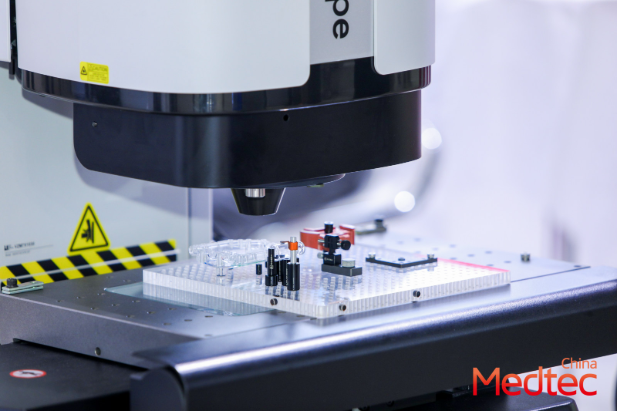
Inspection must combine destructive and non-destructive methods. Visual inspection in a certified cleanroom will catch flash and trapped debris; ultrasonic scans and microscopic cross-sections reveal hidden delamination. Track adhesion performance with regular shear and peel checks, and log accelerated-aging outcomes under humidity and thermal cycles. Maintain retention samples per your internal protocol and record their performance trend lines — this data becomes the early warning system. At trade gatherings like a medical expo in China, suppliers often display case studies that highlight these QA improvements; study them closely for practical implementation cues.
Common mistakes that court failure
Teams habitually underestimate surface cleanliness, over-rely on a single material family, or push cure speed at the cost of adhesion. Vendors will promise tight tolerances but skip retention testing — the illusion of control lulls teams into risky launches. Also, sterilization routes are sometimes chosen without full compatibility testing; gamma, ETO, or autoclave histories interact with polymers differently and must be validated for the specific substrate-overmold pair. Small oversights compound — a misplaced solvent wipe, an off-ratio mix, a marginally higher humidity — and the system becomes brittle.
Implementation checklist and stakeholder roles
Successful programs tie design, process, and verification into a concise workflow: (1) material compatibility matrix and sterilization matrix; (2) controlled surface activation and documented cure schedules; (3) inspection gates with retention sample archives. Engineers own geometry and material choices. Operators enforce process windows. Quality teams own the retention schedule and trend analysis. — This chain prevents surprises and turns single-point failures into managed risks.
Advisory: three metrics to choose resilience
1) Interfacial adhesion index: average peel/shear results over a defined retention period, trended per lot. 2) Fatigue cycle survival percentage: the proportion of assemblies surviving a sterilization-plus-mechanical cycle plan representative of real use. 3) Contamination incidence rate: particles >0.5 μm found per 100 assemblies during incoming inspection. Prioritize these metrics in supplier selection and internal audits; they measure what truly matters.
Acceptance depends on measured performance, not promises — and those metrics guide purchase and process decisions. Medtec. –
