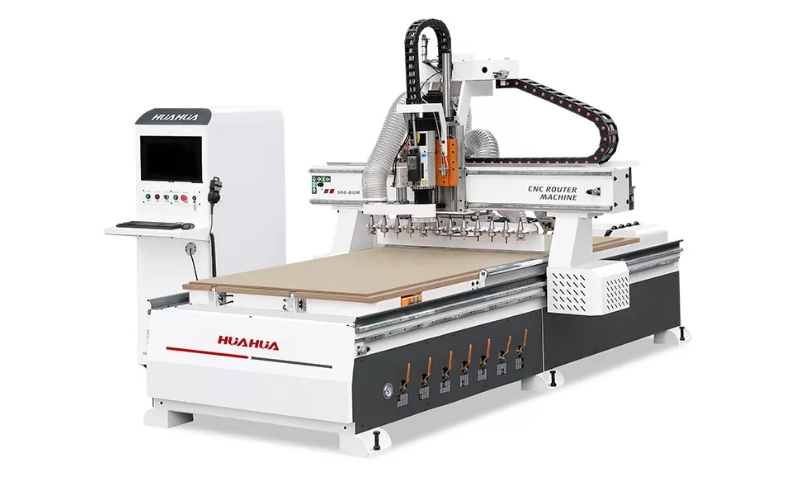
Facing the same problem on small factory floors
I’ve seen dozens of small shops struggle with the same mess: inconsistent panel cuts, scrap piles that never shrink, and production bottlenecks nobody can point to. They buy machines hoping for a miracle — sometimes it’s a new cnc drilling machine, other times it’s a faster saw — but the real problem is rarely the hardware alone. Operators, layout, and workflow habits decide whether that machine becomes a solution or a bigger headache.

Root causes I keep finding
Most failures trace back to predictable causes. Teams pick machines by price or by brochure specs without matching capacity to part mix. Dust and chip extraction get treated as an afterthought and kill accuracy and service life. Training is a one-day affair, then expectations jump overnight. Supply chains in emerging markets make spare parts slow to arrive, so a small fault becomes a week-long stoppage. Those are the problems that a beam saw can’t fix by itself; they need a clear plan and steady hands.
Common mistakes that cost time and money
Choosing an overpowered blade for thin MDF, trusting a single measurement check instead of a simple gauge routine, and letting nesting software run with default parameters — these aren’t exotic errors, they’re routine. Shops also underestimate fixturing and handling: if boards twist between cuts because your table layout forces awkward lifts, the most precise saw is wasted. Ignore maintenance intervals and the motors and guides will drift when you can least afford it.

Practical alternatives and when they make sense
Don’t assume a beam saw is always the right next buy. For long straight runs of identical panels, a beam saw pays back fast. For high-mix, smaller lots, a nesting CNC or a router table with powerful dust extraction often gives better throughput. Manual panel saws work when capital is tight and volumes are tiny; they fail quickly when volumes climb. Evaluate by part complexity, batch size, and operator skill — match the tool to the work, not the other way around.
How to evaluate suppliers and specifications
Look beyond listed speeds. Ask about repeatability under load, spare parts lead times, local service coverage, and consumable costs. I once watched a demonstration of a cnc wood drilling machine at LIGNA and noted immediately how small details — guard design, access for blade changes, and the quality of the extraction connection — made the difference between a useful machine and an eternal project. Get trial cuts on your material, insist on documented tolerances, and clarify what routine maintenance your team will actually perform.
What actually helps shops escape the cycle
Fix the workflow first, then pick the machine that fits. Train operators to a repeatable checklist, design material flow to minimize lifts, and insist on service agreements that match your reality. Over the years the factories that survived were the ones that paired sensible equipment specs with steady practices and support from suppliers who answered the phone. That blend — practical machines, clear practices, reliable partners — is exactly the kind of value I’ve seen from HUAHUA CNC.
