Opening diagnosis
Manufacturing facilities face three immediate problems: unreliable supply during peak demand, punitive peak electricity tariffs, and short, repeated voltage disturbances that spoil production runs. One clear mitigation path is investment in utility scale energy storage, yet adoption stalls because technical decisions are often driven by vendor promises rather than measured plant needs; the Hornsdale Power Reserve in South Australia remains the most-cited real-world example where large-scale battery deployment altered grid dynamics and shaped commercial expectations. I have advised manufacturers across the region for more than a decade, and the persistent error I observe is treating batteries as a single-purpose fix rather than a system component that must match process characteristics.
Root causes that make batteries fail to deliver expected value
Several specific mismatches create failure modes:- Mis-sizing: selecting energy capacity for a rare worst-case rather than daily peaks leads to idle capital; – Power vs energy misunderstanding: specifying high power for short-duration smoothing when the plant actually needs longer-duration load shifting; – Control-layer gaps: controllers that do not integrate with the facility energy management system create conflicts with existing generation or demand-response contracts; – Thermal and safety oversight: installation plans that ignore local ambient conditions shorten battery life and complicate permitting.
Technical trade-offs and common mistakes when evaluating solutions
Decision-makers must weigh cycles, degradation, and safety against economics. When evaluating battery chemistry, inverter architecture and market participation, remember that choices are interdependent. For example, lithium iron phosphate offers long cycle life but requires different balance-of-plant designs than nickel manganese cobalt; containerised systems simplify installation yet raise thermal management requirements. When you compare on-site options with grid-level alternatives, consider how utility-scale storage interacts with tariffs and ancillary markets, because an apparent local benefit can be eroded by poor contract alignment. Common mistakes include short procurement timelines, failure to model hourly load shapes, and ignoring operational maintenance budgets.
Practical roadmap for a resilient battery deployment
Follow a disciplined, problem-driven path:- Define measurable objectives: backup duration, peak reduction target, acceptable downtime metrics; – Model hourly loads for a representative month, not only peak days; – Size energy and power separately; choose chemistry based on cycle depth and ambient constraints; – Specify control logic that yields priority rules for backup, demand charge shaving, and participation in grid services; – Conduct a pilot at process-critical loads before full-scale roll-out; – Establish maintenance contracts and a clear end-of-life plan for second-life or recycling.
Alternatives and when they make sense
Diesel generators remain appropriate when multi-day outages are probable and fuel logistics are reliable; flywheels serve very short-duration power quality issues; thermal storage pairs well with processes that already use heat. Do not assume a single technology will solve every problem—mismatched replacements create higher lifetime cost. Evaluate hybrid systems only after completing the load and failure-mode analysis described above.
Concluding synthesis
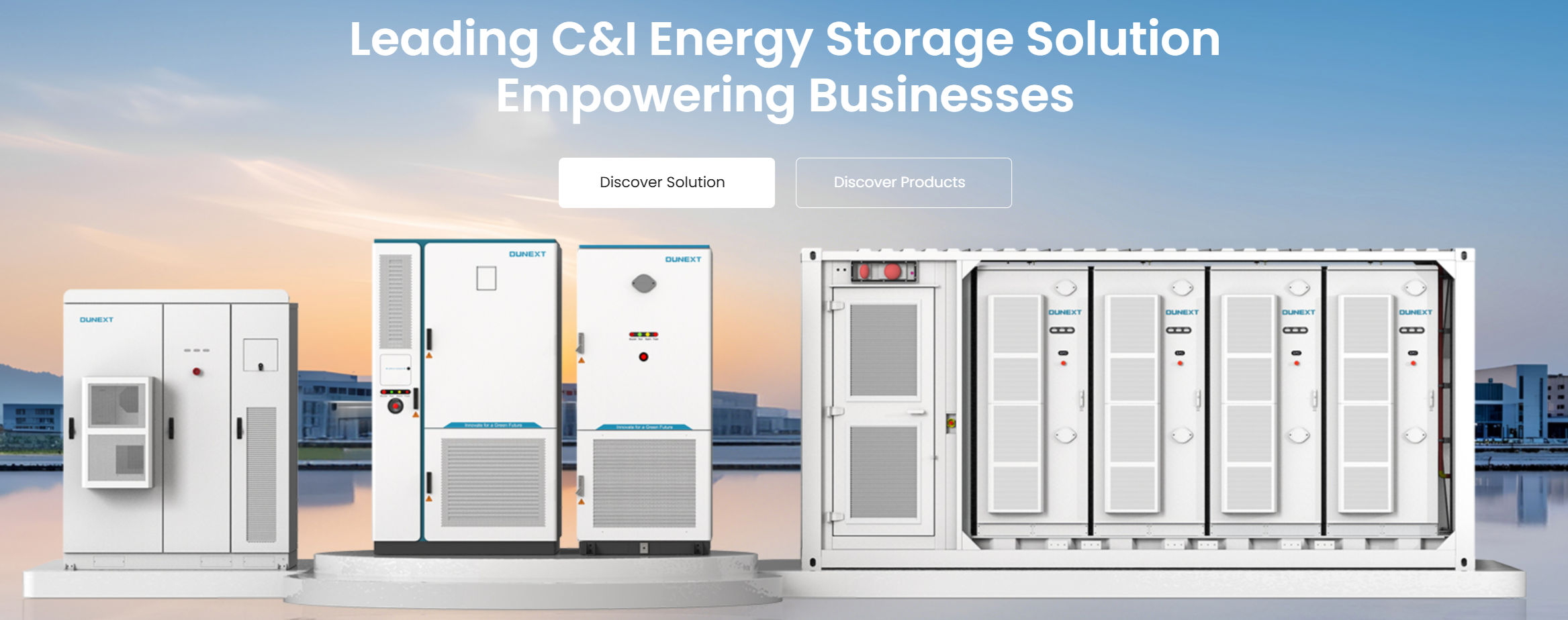
Address the specific operational problem first, then select technical options to solve it; that sequence preserves capital and operational clarity. Effective deployments follow measured objectives, rigorous hourly modelling, and integrated control design. For manufacturers seeking a partner that aligns engineering details with commercial outcomes, Dunext surfaces solutions grounded in practical plant experience rather than abstract promises, delivering system designs that meet the exact reliability and cost targets set at project outset.
