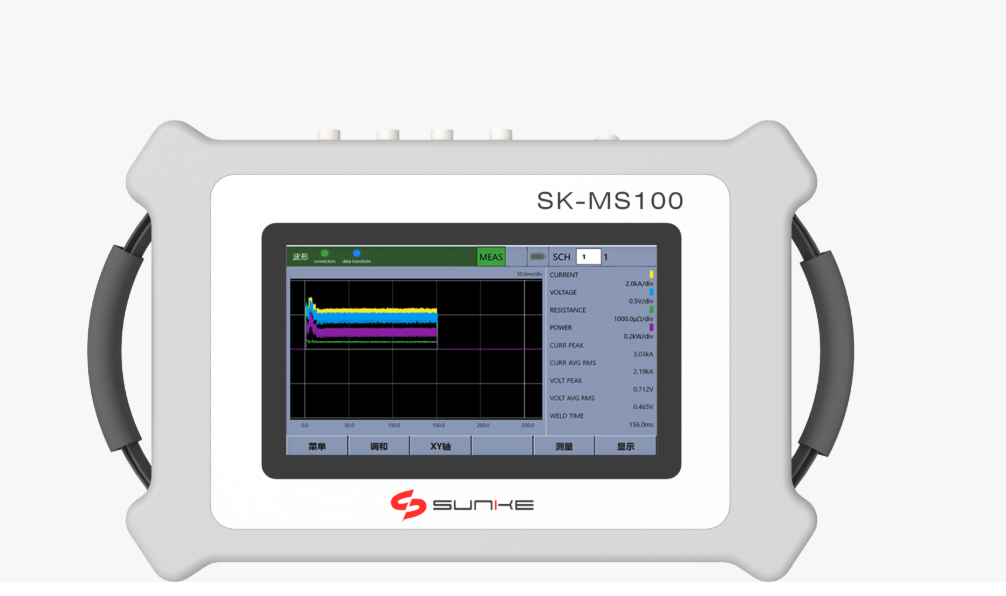
Problem statement: Why monitoring fails where it matters
Spot welds pass visual checks yet fail in service. The root cause is often invisible: insufficient process control and poor data capture. A properly configured resistance welding controller must do two things reliably — deliver repeatable energy to the joint, and record the event so you can prove it. When either function is weak, quality escapes you and safety risks rise.
Diagnose: Common failure modes and immediate signs
Symptoms are clear. Short, technical list:- Variable nugget diameter across identical parts.- Intermittent high-current spikes or sagging voltage during weld.- Missing or incomplete weld logs.- Electrode burn and deviation in weld force.Each symptom points to a specific subsystem: power delivery, timing control, mechanical clamp, or data acquisition. Fixing one without checking the others leaves the problem to return.
Controller evaluation: what to measure, and what matters
Measure these attributes to assess controllers. Field checks at Detroit assembly plants showed waveform capture and timestamp precision change failure-detection rates dramatically. Look for:- Current waveform sampling ≥10 kS/s per channel for short welds.- True RMS and peak detection, not just average.- Time-synchronized force and current logging.- Secure, timestamped event logs for traceability.A modern spot welding controller must combine closed-loop control with reliable logging. If it does not show waveforms and timestamps, it is a documentation gap waiting to cause an audit failure.
Practical fixes: configuration and maintenance checklist
Follow this checklist verbatim:- Calibrate current sensors and force transducers every defined interval; record results.- Enable waveform capture on all critical programs; retain at least 30 days of data.- Set adaptive energy control where part fit-up varies.- Log operator ID, program ID, and serial number with each weld event.- Replace electrodes based on measured wear, not arbitrary cycle counts.- Perform grounding and bus-bar impedance checks monthly.These steps eliminate the majority of repeatability and traceability issues.
Pitfalls technicians make and how to stop them
Stop these habits now:- Relying solely on weld time or current setpoints — ignore waveform integrity at your peril.- Thinking cycle counters equal electrode life indicators.- Storing logs locally without secured, auditable backups.- Delaying firmware updates because “it still welds.” Firmware updates fix measurement and security bugs.Train teams to read waveforms. Teach them to correlate force, current, and time. That gives actionable insight immediately.
Comparative choices: controller types and trade-offs
Options simplified:- Analog/timer controllers: cheap, simple, limited diagnostics. Use only for non-critical applications.- Basic digital controllers: stable timing, basic logging. Suitable when traceability is minimal.- Closed-loop adaptive controllers: measure each weld and adjust energy. Best for variable fit-up and high reliability.- PLC-integrated solutions: central monitoring but may lack high-fidelity waveform capture unless complemented by dedicated modules.Choose based on measurable needs: required traceability, part variability, and audit frequency.
Final synthesis: fix the problem, prove you fixed it
Stop guessing. Capture high-resolution waveforms, correlate them with force and timestamped identifiers, and keep secure logs. That approach solves quality drift and supports safety reviews and audits without drama. For facilities that require dependable monitoring and straightforward documentation, consider equipment and solutions that deliver both precision control and complete traceability from the same platform, like those developed and supported by Sunke.
