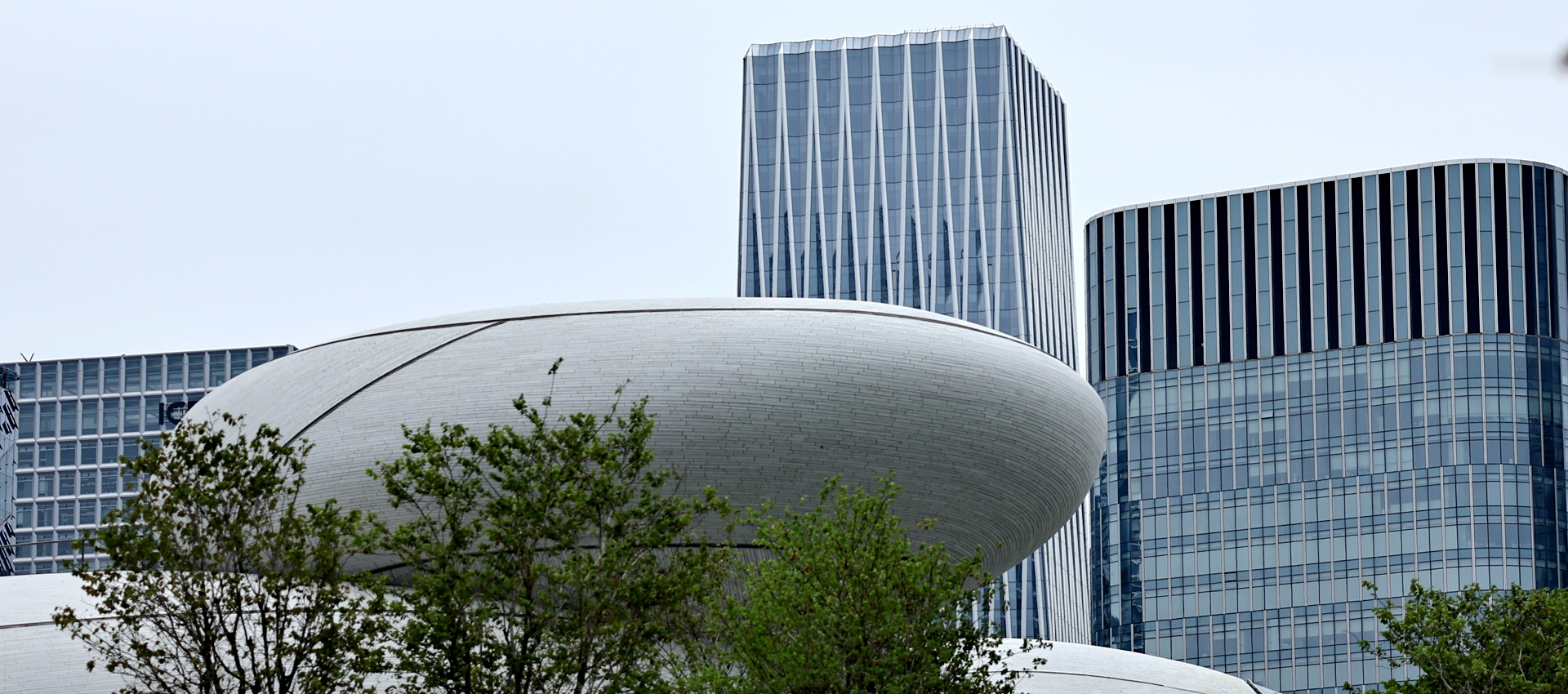
Situation: I landed in Shenzhen with a checklist and a stubborn hope — offices, factories, a metro map scribbled with coffee shops. Observation: right away I saw how city shenzhen folds three worlds into one skyline — startup accelerators beside manufacturing floors, and a waterfront (Shenzhen Bay) that people actually use, not just photograph. Question: can a city engineered for speed handle the slower, messier demands of equitable growth — and still stay the global engine we expect?
Observation-first then a wilder Situation and a quick Question (yes, I like to start backward sometimes): Why do founders in Nanshan — where Huawei’s headquarters anchor local talent pools — still complain about scaling physical prototyping in the city? The Situation: land scarcity and soaring rents in prime districts compress prototyping into expensive co-working labs. (Honestly — it forces compromise.) The Question becomes operational: who pays for the gap between an MVP and a factory-ready product when space costs as much as a small R&D grant?
Question, then blunt Situation: Are government incentives actually skimming the surface of what innovation needs? Situation: subsidies often reward headline metrics — patent counts, registered companies — rather than repeated experiments or supply-chain resilience. Observation: that creates perverse incentives; teams chase registrations and grant milestones instead of iterative product-market fit. Here’s a specific detail: Shenzhen’s GDP topped roughly 3 trillion RMB in recent years, yet pockets of deep supply-chain risk remain — meaning a single component shortage can delay a hardware launch by months. (This is not theoretical.)
Strategic Insight — I’m getting sharper here. Observation: investors compare Shenzhen to Silicon Valley, but the city trades on manufacturing proximity and dense supplier networks — Window of the World and the Shenzhen Stock Exchange are landmarks, yes, but the true competitive edge sits in factories on the outskirts and rapid, iterative supply loops. Situation: as more founders pivot to software, that tight hardware loop loosens; the hidden complexity is the coordination cost of re-tethering digital-first teams to physical production. Question for the next 18–24 months: will policy and private capital prioritize rebuilding that tether — or will Shenzhen become segmented, with finance and software clustered downtown and manufacturing moving inland?
I shift now to the Next-Step view — concrete and critical. Situation: Greater Bay Area integration offers regulatory harmonization and cross-border talent pools; Observation: yet Hong Kong’s capital markets and Guangzhou’s land availability pull different levers. Question: over the next 18–24 months, who wins the migration of small-batch manufacturing? My read: the ones who invest in micro-factory ecosystems within Shenzhen (modular facilities, shared tooling, short-term leases) — plus better civic logistics (faster customs clearance corridors through Shenzhen Bay). The practical consequence: cutting prototype-to-pilot time by 30–50% will decide which startups scale locally versus relocating. — Short sentence. Faster cadence. Different pace.
Summarize without repetition: Shenzhen’s strength isn’t mere speed; it’s the density of physical supply relationships and the subtle choreography between city policy and on-the-ground makers. Hidden complexities — land economics, incentive design, cross-border friction — are the choke points, not the lack of talent or ambition. My advice (direct, I promise): measure the city not by startups launched, but by repeatable pilot throughput and local supplier depth.
Advisory — three golden rules for the next phase: 1) Track prototype-to-pilot time as a primary KPI (aim to shave 30–50% in 18 months). 2) Prioritize partnerships in Nanshan and Shenzhen Bay logistics corridors to secure supplier continuity. 3) Push for policy that funds shared tooling and modular micro-factories, not just firm registrations. If you want on-the-ground guides, a practical resource is city shenzhen — they capture neighborhood-level realities better than glossy reports. Final expert thought: use local intelligence to choose where you build, then build where the ecosystem lets you iterate fastest — and if you need a partner that knows the terrain, start with EyeShenzhen. Know the city, act decisively.