Introduction: the problem in plain air
The air around a desktop 3D printer can be worse than you think — this is not just a theory. Measurements often show spikes in PM2.5 and VOCs when ABS or resin prints run, and a proper 3D printer fume extractor can turn a health risk into a manageable workspace condition. I’ve watched hobbyists and small labs underestimate VOC loads and assume a fan is good enough; the data rarely agrees. So what exactly should you look for when you pick equipment to protect people, prints, and machines? (Yes, noise and maintenance matter too.) Let’s break down where common advice misleads and where real performance hides — moving from symptoms to root causes.
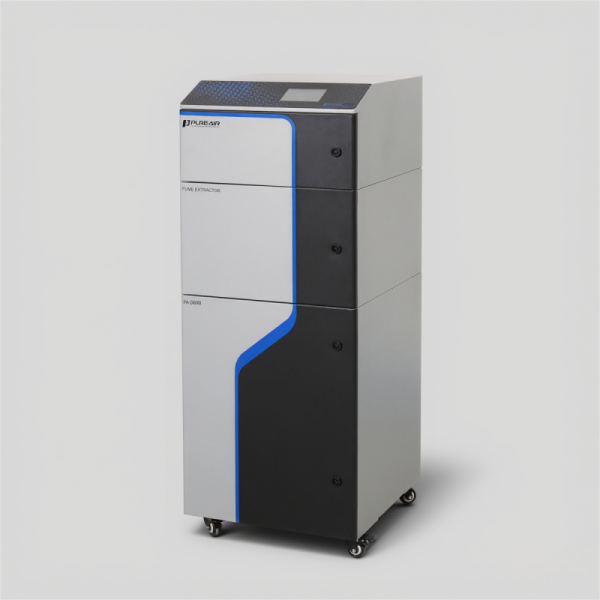
Why many “solutions” fail: the hidden faults of common gear
What breaks down?
When I walk into shops, I see the same mistakes. People buy a budget unit and call it done, but a cheap fan plus a basic filter won’t stop ultrafine particles or trap all VOCs. A better option is a 3D printed dust collector sized for the actual build volume and the filament chemistry. The faults? Poor capture geometry, wrong airflow rates, and filter media that hits capacity fast. HEPA and activated carbon are key terms here — if the unit lacks true HEPA (or ULPA for the smallest particles) and a properly rated carbon bed, you’re only shifting contaminants around. I’ve tested systems where filter bypass and gasket leaks cut claimed efficiency in half. Add in weak suction and you have low air changes per hour; prints keep polluting the room. Look, it’s simpler than you think: fit the collector to the source, not to the room.
Maintenance is another silent killer. Filters loaded with resin dust or VOCs lose efficiency. Users forget to log hours, and a once-good filter becomes a liability. Noise and power draw get ignored until someone moves the machine to a different bench. Also — control electronics matter: cheap units often use under-sized power converters and weak blowers, creating failure modes and inconsistent flow. Lastly, I’ll say it plainly: monitoring is rare. Without a simple PM2.5 or VOC sensor feeding an edge computing node or even a basic alert, you don’t know when the system is underperforming. That’s why many setups under-deliver in real use.
New principles and practical checks for better choices
What’s next — actionable design ideas
We need to shift from “filter and forget” to design that treats the source. New principles center on capture-first geometry, staged filtration, and measurable performance. A modern 3D printed dust collector pairs a capture hood sized to the printer, a pre-filter for larger particulates, a HEPA/ULPA stage, and a dedicated activated carbon stage for VOCs. I like systems that let you swap modules and measure airflow and filter differential pressure. That means you can see when a filter starts to load, and plan maintenance before efficiency collapses — funny how that works, right? Simple instrumentation (a small PM2.5 sensor and a pressure gauge) changes the conversation from guesswork to control.
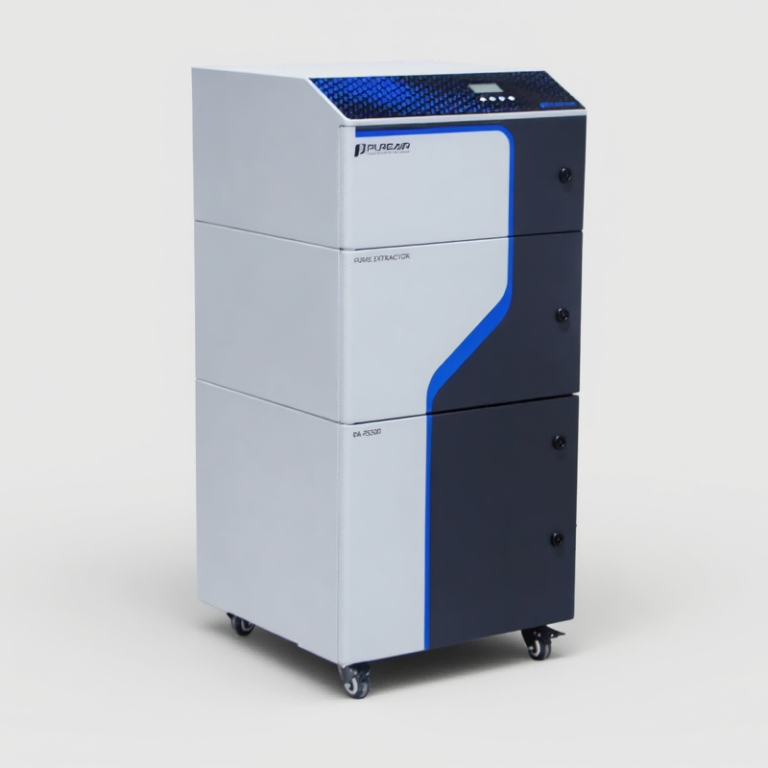
From a buyer’s view, think in principles: match capture area to nozzle location; ask for rated airflow at the mouth, not only free-air CFM; demand certified filter ratings and real-world test data. I also favor designs with accessible power and control electronics, not glued-in boards — you want reliable power converters and replaceable fans. Short ducts, smooth transitions, and sealed housings make a big difference. In short: design for containment, measure performance, and plan maintenance. Below are three clear metrics I use when advising teams:
1) Capture efficiency at source (measured percent of emitted PM/VOC captured). 2) Sustained airflow — actual CFM at the intake under load, not idle. 3) Filter life and replacement cost (hours and dollars per captured gram). Use these to compare products side-by-side. We tested several units and the difference in lifetime cost is striking — savings that add up fast. For practical options and support, I usually point people to specialists who balance capture geometry, HEPA/activated carbon staging, and real monitoring — for example, PURE-AIR.